Shopping cart
Your cart empty!


Your cart empty!
Terms of use dolor sit amet consectetur, adipisicing elit. Recusandae provident ullam aperiam quo ad non corrupti sit vel quam repellat ipsa quod sed, repellendus adipisci, ducimus ea modi odio assumenda.
Lorem ipsum dolor sit amet consectetur adipisicing elit. Sequi, cum esse possimus officiis amet ea voluptatibus libero! Dolorum assumenda esse, deserunt ipsum ad iusto! Praesentium error nobis tenetur at, quis nostrum facere excepturi architecto totam.
Lorem ipsum dolor sit amet consectetur adipisicing elit. Inventore, soluta alias eaque modi ipsum sint iusto fugiat vero velit rerum.
Sequi, cum esse possimus officiis amet ea voluptatibus libero! Dolorum assumenda esse, deserunt ipsum ad iusto! Praesentium error nobis tenetur at, quis nostrum facere excepturi architecto totam.
Lorem ipsum dolor sit amet consectetur adipisicing elit. Inventore, soluta alias eaque modi ipsum sint iusto fugiat vero velit rerum.
Dolor sit amet consectetur adipisicing elit. Sequi, cum esse possimus officiis amet ea voluptatibus libero! Dolorum assumenda esse, deserunt ipsum ad iusto! Praesentium error nobis tenetur at, quis nostrum facere excepturi architecto totam.
Lorem ipsum dolor sit amet consectetur adipisicing elit. Inventore, soluta alias eaque modi ipsum sint iusto fugiat vero velit rerum.
Sit amet consectetur adipisicing elit. Sequi, cum esse possimus officiis amet ea voluptatibus libero! Dolorum assumenda esse, deserunt ipsum ad iusto! Praesentium error nobis tenetur at, quis nostrum facere excepturi architecto totam.
Lorem ipsum dolor sit amet consectetur adipisicing elit. Inventore, soluta alias eaque modi ipsum sint iusto fugiat vero velit rerum.
Do you agree to our terms? Sign up
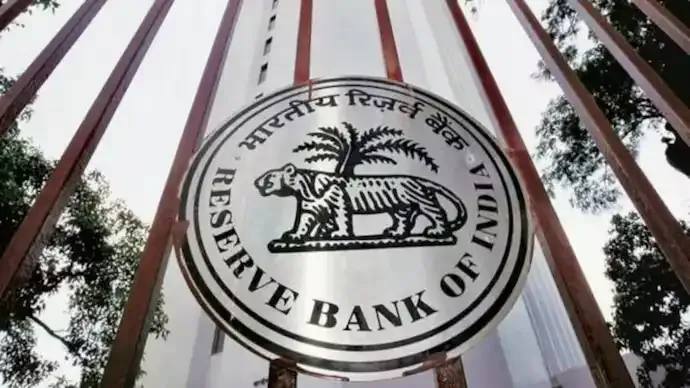
India has taken a significant step toward reshaping cross-border financial flows by proposing the interlinking of digital currencies among BRICS nations, a move that could reduce reliance on the US dollar and transform how emerging economies settle trade and tourism payments.
According to sources familiar with the matter, the Reserve Bank of India has recommended that the Indian government place the proposal on the agenda of the 2026 BRICS Summit, which India is set to host later this year. If accepted, it would mark the first formal attempt to connect central bank digital currencies (CBDCs) across the BRICS bloc.
The proposal comes at a time when geopolitical tensions and renewed tariff threats have prompted many emerging economies to seek alternatives to dollar-dominated settlement systems. By enabling interoperability between BRICS digital currencies, cross-border transactions could become faster, cheaper and less dependent on traditional correspondent banking channels.
The BRICS grouping includes Brazil, Russia, India, China and South Africa, along with newer members such as the UAE, Iran and Indonesia. Together, these economies account for a substantial share of global trade, making any shift in settlement mechanisms geopolitically significant.
While details are still under discussion, officials indicate that the initiative would require a shared technological and governance framework to manage settlements, address trade imbalances and ensure interoperability between national CBDC platforms.
One mechanism under consideration is the use of bilateral foreign exchange swap arrangements between BRICS central banks. Under this model, imbalances arising from trade flows could be settled periodically, such as weekly or monthly, rather than through continuous dollar conversion.
This approach could help avoid scenarios like the recent accumulation of rupee balances by Russia, which emerged when India increased imports but lacked equivalent exports to balance trade.
India has been vocal about expanding the role of the digital rupee beyond domestic use. Since its launch in December 2022, the e-rupee has attracted around seven million retail users, supported by features such as offline payments, programmability for subsidies and integration with fintech wallets.
China, meanwhile, has been pushing for broader adoption of its digital yuan, including in cross-border trade pilots. Although none of the core BRICS economies have fully rolled out their CBDCs, all are currently running advanced pilot programmes.
Any coordinated move by BRICS to link digital currencies is expected to draw close attention from Washington. US President Donald Trump has previously criticised BRICS as an “anti-American” bloc and has threatened tariffs on member countries, adding a layer of geopolitical sensitivity to the proposal.
Despite earlier discussions around a common BRICS currency, that idea has been shelved. Instead, the focus has shifted to practical interoperability, which officials see as a more achievable and less disruptive alternative.
Indian policymakers remain cautious about privately issued stablecoins, which the RBI has argued could undermine monetary sovereignty and financial stability. Central bank digital currencies, by contrast, are viewed as a safer option, offering innovation without surrendering regulatory control.
If taken forward, India’s proposal could become one of the most consequential financial initiatives discussed at the 2026 BRICS Summit, potentially reshaping how emerging economies conduct trade, manage currency risk and challenge the long-standing dominance of the US dollar in global payments.
111
Published: Jan 20, 2026

All India Story is your trusted source for comprehensive and up-to-the-minute news coverage across India. Bringing you the latest on politics, business, technology, entertainment, sports, and more, we are dedicated to keeping you informed with accurate, engaging, and insightful stories from every corner of the nation.