

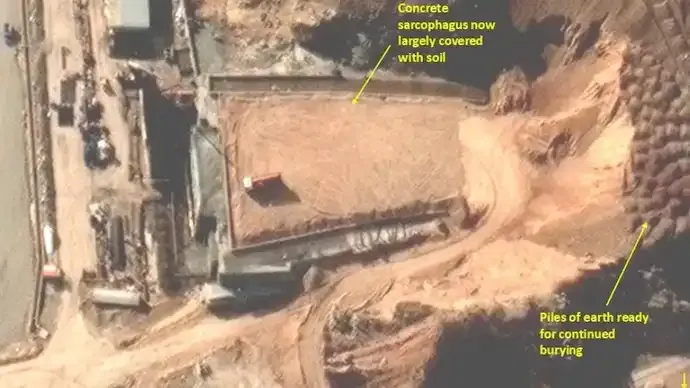

Satellite imagery indicates that Iran is strengthening key nuclear facilities by burying structures under concrete and soil while upgrading air defence systems. The developments come amid rising military pressure from the United States and ongoing diplomatic negotiations over Tehran’s nuclear programme.
Analysis from the Institute for Science and International Security suggests Iran has accelerated protective measures at sensitive sites in recent weeks, raising fresh concerns among international observers.
Bunker-Like Reinforcement at Parchin Facility
High-resolution imagery shows construction at the Taleghan 2 facility within the Parchin military complex, located southeast of Tehran.

A concrete shell has reportedly been completed around the main structure, with soil now being piled over it. Analysts say the reinforcement could transform the site into a hardened bunker capable of withstanding aerial strikes.
Earth mounds are also visible around the facility, potentially designed to conceal and protect key structures while leaving only limited access points exposed.
Security walls and a concrete production setup inside the complex indicate continued fortification activity.
Tunnel Hardening Near Natanz Nuclear Site
Additional imagery shows protective construction near the Natanz nuclear facility, one of Iran’s most critical nuclear sites.
Tunnel entrances beneath nearby mountain terrain are being reinforced with concrete and additional layers of soil and rock — known as overburden — to absorb the impact of potential airstrikes.
Vehicles observed near the entrances suggest interior outfitting and construction work may still be underway.
Experts note that the site has previously been linked to centrifuge assembly activities, though the full purpose of the expanded underground complex remains unclear.
Concealment Measures at Esfahan Nuclear Complex
Imagery also indicates concealment efforts at the Esfahan nuclear complex, another strategic nuclear location.
Tunnel entrances appear to be masked or shielded, though analysts say it remains uncertain how effective these measures would be against high-powered strikes.
Air Defence Upgrades and Security Enhancements
Iran has reportedly strengthened air defences around sensitive sites. An abandoned anti-aircraft position near Parchin was reactivated in 2025, and additional anti-aircraft artillery positions have been installed.
These systems are intended to improve protection against aerial threats and reinforce defensive readiness.
Strategic Implications Amid Ongoing Diplomacy
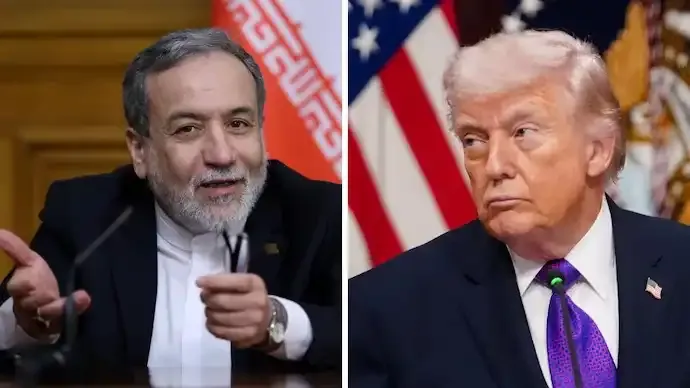
The fortification efforts come as negotiations between Washington and Tehran continue, with further proposals expected in the coming weeks.
Analysts say the construction signals the strategic importance of these facilities, even if their precise functions cannot be determined solely through satellite imagery.
The developments highlight a dual-track approach: continued diplomatic engagement alongside strengthened defensive infrastructure.
Rising Regional Tensions
With US military assets increasing in the region and nuclear talks ongoing, the fortification of nuclear infrastructure underscores the fragile security environment in the Middle East.
Observers warn that escalating tensions could affect regional stability, energy markets, and global security dynamics.
As diplomacy continues, the latest imagery reflects both the strategic significance of Iran’s nuclear infrastructure and the broader geopolitical pressures shaping the region.






Conversation
Be kind and stay on topic. Comments are moderated; abuse, spam and personal attacks are removed. Report a problem