Shopping cart
Your cart empty!


Your cart empty!
Terms of use dolor sit amet consectetur, adipisicing elit. Recusandae provident ullam aperiam quo ad non corrupti sit vel quam repellat ipsa quod sed, repellendus adipisci, ducimus ea modi odio assumenda.
Lorem ipsum dolor sit amet consectetur adipisicing elit. Sequi, cum esse possimus officiis amet ea voluptatibus libero! Dolorum assumenda esse, deserunt ipsum ad iusto! Praesentium error nobis tenetur at, quis nostrum facere excepturi architecto totam.
Lorem ipsum dolor sit amet consectetur adipisicing elit. Inventore, soluta alias eaque modi ipsum sint iusto fugiat vero velit rerum.
Sequi, cum esse possimus officiis amet ea voluptatibus libero! Dolorum assumenda esse, deserunt ipsum ad iusto! Praesentium error nobis tenetur at, quis nostrum facere excepturi architecto totam.
Lorem ipsum dolor sit amet consectetur adipisicing elit. Inventore, soluta alias eaque modi ipsum sint iusto fugiat vero velit rerum.
Dolor sit amet consectetur adipisicing elit. Sequi, cum esse possimus officiis amet ea voluptatibus libero! Dolorum assumenda esse, deserunt ipsum ad iusto! Praesentium error nobis tenetur at, quis nostrum facere excepturi architecto totam.
Lorem ipsum dolor sit amet consectetur adipisicing elit. Inventore, soluta alias eaque modi ipsum sint iusto fugiat vero velit rerum.
Sit amet consectetur adipisicing elit. Sequi, cum esse possimus officiis amet ea voluptatibus libero! Dolorum assumenda esse, deserunt ipsum ad iusto! Praesentium error nobis tenetur at, quis nostrum facere excepturi architecto totam.
Lorem ipsum dolor sit amet consectetur adipisicing elit. Inventore, soluta alias eaque modi ipsum sint iusto fugiat vero velit rerum.
Do you agree to our terms? Sign up

Saudi Arabia has made it clear that it will not permit its territory or airspace to be used for any military action against Iran, signalling a firm diplomatic position amid heightened regional tensions and growing international speculation over potential conflict. The assurance was conveyed by Saudi Crown Prince Mohammed bin Salman during a phone conversation with Iranian President Masoud Pezeshkian.
During the call, the Saudi crown prince reaffirmed Riyadh’s commitment to regional stability and underscored its support for efforts aimed at resolving disputes through dialogue rather than confrontation. He stressed that Saudi Arabia backs any initiative that promotes de-escalation and peaceful engagement, particularly at a time when the Middle East is facing renewed uncertainty driven by geopolitical and security concerns.
According to official statements, Crown Prince Mohammed bin Salman emphasised that Saudi Arabia would not allow its land, airspace, or territorial waters to be used as a platform for launching attacks on Iran. The message aligns with Riyadh’s broader diplomatic outreach in recent years, which has focused on reducing tensions and rebuilding ties with regional rivals.
Iranian media reported that President Pezeshkian welcomed the Saudi position, stating that Tehran supports any process, grounded in international law, that helps prevent war and promotes regional peace. The exchange reflects cautious but notable diplomatic engagement between the two regional powers, whose relationship has historically been marked by rivalry and periods of deep strain.
Saudi Arabia’s stance follows a similar declaration by the United Arab Emirates, which recently stated that it would also not permit its airspace or territorial waters to be used for military action against Iran. Together, these statements suggest a broader regional reluctance to be drawn into any potential military escalation involving Tehran.
The renewed focus on regional diplomacy comes amid lingering uncertainty after US President Donald Trump said last week that a US naval “armada” was moving closer to Iran, though he expressed hope that force would not ultimately be used. The remarks followed warnings from Washington directed at Tehran over the killing of protesters and concerns surrounding Iran’s nuclear programme.
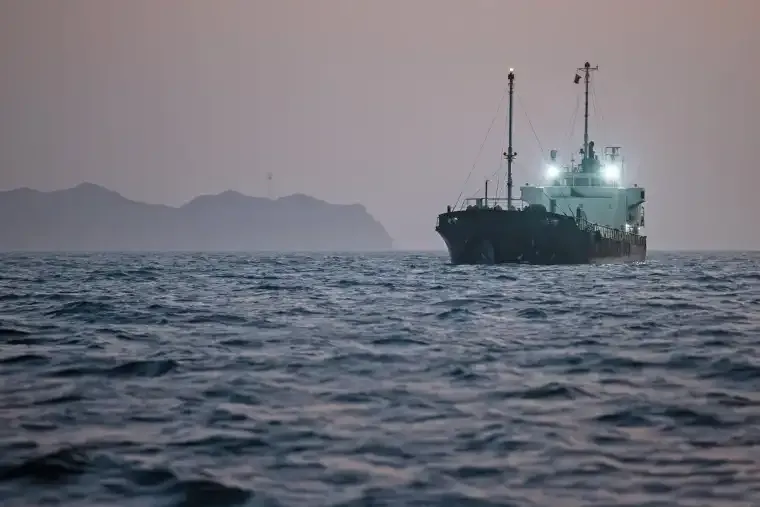
In recent days, a US aircraft carrier and accompanying warships have arrived in the Middle East, significantly increasing American military presence in the region. While US officials have said the deployment is primarily aimed at defending American forces and deterring threats, it has also fuelled speculation about potential military scenarios.
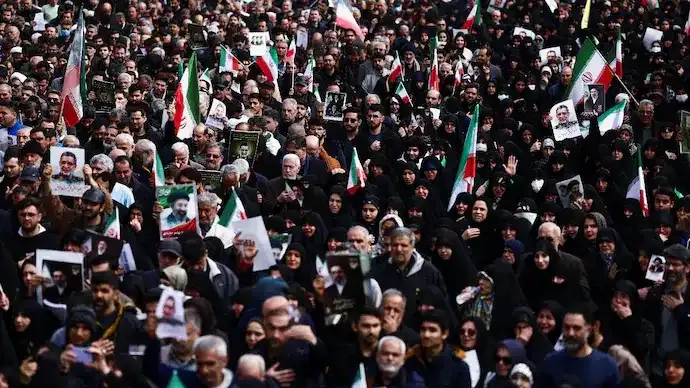
Iran has witnessed widespread protests in recent months, with human rights organisations alleging that thousands of people, including civilians and bystanders, were killed during a severe security crackdown. These groups describe the unrest as the most intense repression since the 1979 Islamic Revolution. Iranian authorities, however, have rejected those claims, asserting that the violence was instigated by terrorists and rioters supported by opposition groups operating from abroad.
Against this backdrop, Saudi Arabia’s public commitment to neutrality underscores its desire to avoid further destabilisation in the Gulf and the wider Middle East. Analysts say Riyadh is seeking to position itself as a stabilising actor, prioritising diplomatic engagement over military alignment as regional dynamics grow increasingly complex.
As tensions ebb and flow, the call between the Saudi crown prince and the Iranian president highlights ongoing efforts by regional powers to prevent escalation and maintain fragile stability in a volatile geopolitical environment.
78
Published: Jan 28, 2026

All India Story is your trusted source for comprehensive and up-to-the-minute news coverage across India. Bringing you the latest on politics, business, technology, entertainment, sports, and more, we are dedicated to keeping you informed with accurate, engaging, and insightful stories from every corner of the nation.