



A four-decade-old legal battle has returned to the national spotlight following the release of the Netflix courtroom drama Haq, which draws inspiration from the historic Shah Bano case. As the film gains traction on OTT platforms, it has reignited discussions around women’s rights, personal law, secularism, and the limits of judicial reform in India.
The original Shah Bano case remains one of the most significant and controversial judgments delivered by the Supreme Court of India. Shah Bano Begum, a Muslim woman from Indore, was married in 1932 to Mohammed Ahmed Khan, a lawyer. After more than 40 years of marriage and five children, she was divorced in 1978 and denied financial support. With no independent means of livelihood in her old age, Shah Bano approached the court seeking maintenance under Section 125 of the Code of Criminal Procedure, a secular provision meant to prevent destitution.
Her husband contested the claim, arguing that under Muslim Personal Law, maintenance was only payable during the iddat period following divorce. The legal battle culminated in a landmark 1985 verdict, with a five-judge bench led by then Chief Justice Y. V. Chandrachud ruling in Shah Bano’s favour. The court held that Section 125 applied to all citizens regardless of religion, emphasising that personal laws could not override constitutional principles aimed at social justice.

The judgment, however, triggered intense political and religious backlash. Several clerical bodies opposed the ruling, arguing that it interfered with Islamic law. Under mounting pressure, the government led by Rajiv Gandhi enacted the Muslim Women (Protection of Rights on Divorce) Act, 1986, which effectively diluted the Supreme Court’s decision by limiting post-divorce maintenance largely to the iddat period. Eventually, Shah Bano herself withdrew her claim, stating that she did not wish to go against religious law, despite having legally won the case.
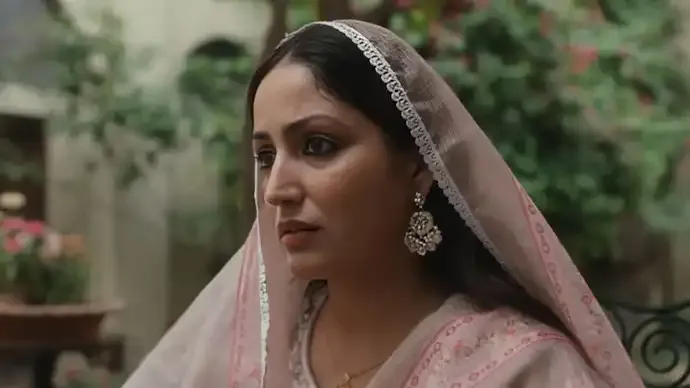
The Netflix film Haq, while inspired by these events, is not a biographical retelling. The makers have taken creative liberties to present a more empowering and dramatized narrative. In the film, Yami Gautam plays Shazia Bano, a younger and more vocal protagonist, while Emraan Hashmi essays a key legal role. Unlike real life, the film shows its central character emerging victorious with dignity and closure, without the social retreat that marked Shah Bano’s later years.
Key differences stand out. Shah Bano was in her 60s during the legal battle, while the film’s protagonist is portrayed as much younger. Shah Bano was the daughter of a police constable, whereas Shazia Bano is depicted as the daughter of a maulvi. The real case spanned about seven years, but the film stretches the struggle for dramatic effect. Financial details, family structure, and courtroom dynamics are also altered to suit cinematic storytelling.
Despite these differences, Haq has succeeded in reviving public interest in a case that continues to influence debates on the Uniform Civil Code, women’s rights, and the relationship between faith and law. The Shah Bano case remains a powerful reminder of how a single legal battle can reshape constitutional discourse—while also highlighting the personal cost borne by those who challenge entrenched social norms.







Conversation
Be kind and stay on topic. Comments are moderated; abuse, spam and personal attacks are removed. Report a problem