

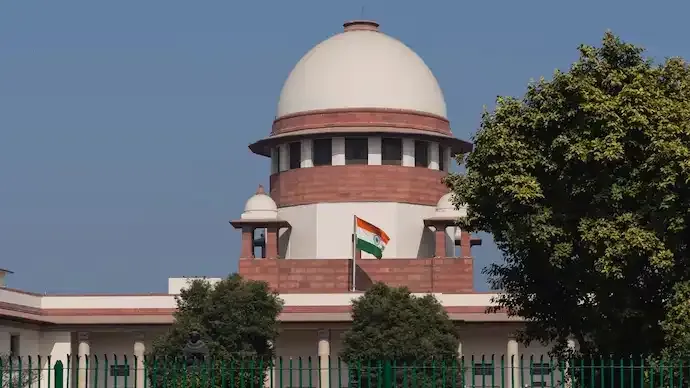

In a significant ruling, the Supreme Court of India has held that the mere use of abusive language during a heated argument does not automatically amount to obscenity under criminal law.
The judgment draws a clear distinction between vulgar or offensive speech and legally punishable obscenity, offering important clarity on how such cases should be interpreted.
Key Observation by the Court
A bench comprising Justice PS Narasimha and Justice Manoj Misra stated that for an offence under Section 294 of the Indian Penal Code (IPC), the language used must contain a sexual or prurient element.

The court emphasized that:
- Mere abusive or insulting words are not sufficient
- Obscenity must involve sexual connotations
- Context plays a crucial role in determining the offence
Understanding Section 294 IPC
Section 294 of the IPC deals with obscene acts and songs in public places. The ruling clarifies that not all offensive language falls under this provision.
According to the court, criminal liability arises only when:
- The act or words are obscene in nature
- They involve sexual overtones
- They cause annoyance in a public setting
This interpretation narrows the scope of what can be considered an offence under this section.
Impact on Criminal Law and Daily Disputes
The ruling is expected to have a significant impact on how everyday disputes and verbal altercations are treated under criminal law.
Legal experts believe this decision:
- Prevents misuse of obscenity laws
- Protects individuals from unnecessary criminal charges
- Promotes a more precise interpretation of legal provisions
It also reinforces the principle that not all offensive speech should lead to criminal prosecution.
Balancing Free Speech and Legal Boundaries
The judgment highlights the need to balance freedom of expression with legal safeguards. While abusive language may still be socially unacceptable, the court has clarified that it does not automatically qualify as a criminal offence unless it meets specific legal criteria.
Broader Legal Significance
This ruling is likely to influence future cases involving allegations of obscene language, setting a precedent for courts and law enforcement agencies.
By clearly defining the boundaries of obscenity, the Supreme Court has contributed to a more nuanced understanding of criminal law in India.








Conversation
Be kind and stay on topic. Comments are moderated; abuse, spam and personal attacks are removed. Report a problem