

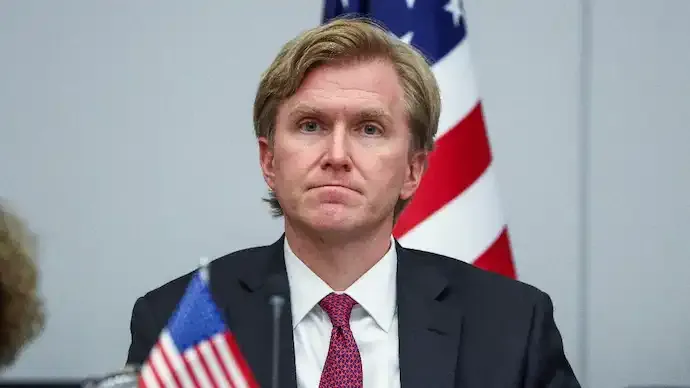

A senior US defence official, Elbridge Colby, has rejected the idea that an alliance of so-called "middle powers" could emerge as an alternative to American global leadership, arguing that such efforts lack strategic coherence despite growing calls for countries to diversify security partnerships.
Colby's remarks come as several European nations increase defence cooperation and seek greater strategic autonomy amid concerns over the Trump administration's America First foreign policy.
Colby dismisses 'middle powers' alliance
In a series of posts on X, Elbridge Colby, the US Under Secretary of Defence for Policy, argued that countries attempting to form a bloc outside the US-led international order would struggle to achieve meaningful influence.

According to Colby, nations pursuing a "middle powers" strategy risk wasting valuable political and economic resources.
"We are not concerned that this is a serious possibility. Rather, we are more concerned that a few allies and partners will think it is and waste valuable time, money, and political capital on a distraction," Colby wrote.
He maintained that strategic alliances are ultimately shaped by national interests, geography, economic capabilities and military strength rather than political labels.
What are 'middle powers'?
The term "middle powers" generally refers to influential countries that possess significant diplomatic, economic or regional influence but are not considered global superpowers.
Countries commonly identified as middle powers include:
- Australia
- Canada
- Japan
- Brazil
- Indonesia
India has consistently rejected the "middle power" label.
External Affairs Minister S. Jaishankar has instead described India as a "power in the middle," reflecting the country's strategic autonomy and expanding global role.
Some policymakers have proposed greater cooperation among these nations to strengthen multilateral institutions and reduce dependence on major powers such as the United States and China.
Europe seeks greater strategic autonomy
Colby's comments come amid growing efforts by several European governments to strengthen their own defence capabilities.
Frustrated by repeated suggestions that Washington could reduce its military commitment to NATO, European nations have accelerated initiatives aimed at expanding defence production, improving energy security and reducing strategic dependence.
Recent discussions among European leaders have focused on:
- Joint missile defence projects
- Expanding domestic defence manufacturing
- Diversifying strategic partnerships
- Enhancing technological cooperation
Despite these developments, Colby insisted that demand for US military leadership remains strong.
"We see an upsurge in desire for engagement with the United States, not a reduction," he said.
Architect of Trump's defence strategy
Since taking office in 2025, Colby has emerged as one of the principal architects of President Donald Trump's national security strategy.
His policy priorities include:
- Strengthening homeland defence
- Prioritising deterrence against China
- Reducing the US military footprint in Europe and the Middle East
- Encouraging allies to shoulder greater defence responsibilities
He has also played a key role in shaping the 2026 US National Defense Strategy.
US defence industry remains unmatched, says Colby
Colby also rejected suggestions that allied nations could build defence industries capable of rivaling the United States.
According to him, America's defence manufacturing base remains unmatched in both scale and capability.
"The United States makes the best equipment, and we make it at a scale that no plausible competitor can match," Colby said.
He added that Washington welcomes greater defence investment by allies, provided such efforts complement rather than compete with American capabilities.
Debate over the future of global alliances
Colby's remarks have added to an ongoing debate about the future of global security partnerships.
While the Trump administration continues to promote an "America First" approach, many US allies are simultaneously investing in stronger regional cooperation and broader diplomatic relationships.
Whether these efforts evolve into a formal "middle powers" coalition remains uncertain, but discussions around strategic autonomy and diversified partnerships are expected to remain central to global geopolitics.
Key Highlights
- US defence official Elbridge Colby dismissed the concept of a "middle powers" alliance.
- He argued such countries lack a coherent strategic basis for alignment.
- Colby said allies continue seeking closer engagement with the United States.
- European nations are expanding defence cooperation amid concerns over US policy.
- India continues to reject the "middle power" label, describing itself as a "power in the middle."
- Colby reiterated that the US defence industry remains unmatched globally.
FAQs
Who is Elbridge Colby?
Elbridge Colby is the US Under Secretary of Defence for Policy and one of the principal architects of the Trump administration's national defence strategy.
What are middle powers?
Middle powers are influential countries with significant regional or global influence but are not considered superpowers. Examples include Australia, Canada, Japan, Brazil and Indonesia.
Why did Colby reject the middle powers concept?
Colby argued that countries grouped as middle powers do not share sufficient strategic interests to form a meaningful geopolitical bloc capable of rivaling US leadership.
Why are European countries increasing defence cooperation?
Several European nations are strengthening defence capabilities and strategic partnerships amid concerns about future US commitments to NATO and broader regional security.
Has India accepted the middle power label?
No. India has rejected the label, with External Affairs Minister S. Jaishankar describing the country instead as a "power in the middle."






Conversation
Be kind and stay on topic. Comments are moderated; abuse, spam and personal attacks are removed. Report a problem