

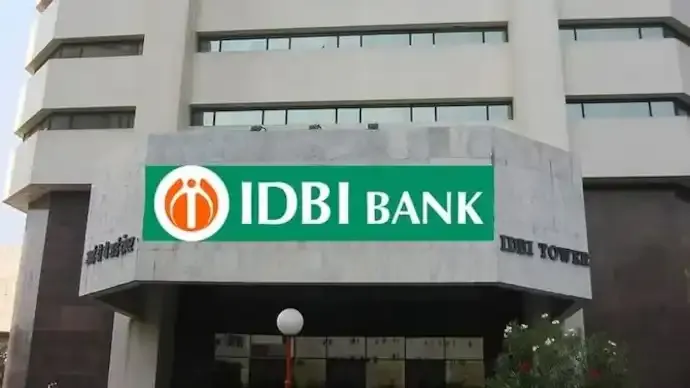

The Indian government's long-awaited plan to privatise IDBI Bank appears to be moving closer to completion, with Canadian investment giant Fairfax Financial Holdings emerging as the frontrunner to acquire a controlling stake in the lender.
If the transaction receives all necessary approvals, the deal could be valued at $5.5 billion-$5.7 billion, making it one of the largest foreign investments in an Indian bank and among the country's most significant privatisation deals in recent years.
While no final decision has been announced and the bidding process remains under evaluation, the proposed acquisition is being closely watched for what it could mean for India's banking sector, foreign investment and government disinvestment programme.

What is the proposed IDBI Bank deal?
The Centre and Life Insurance Corporation of India (LIC) are jointly planning to sell a 60.7% stake in IDBI Bank.
Currently:
- The Government of India owns around 45.5%
- LIC holds nearly 49.2%
- Together, they control almost 95% of the bank
Following a lengthy bidding process, two contenders remain:
- Fairfax Financial Holdings
- Emirates NBD of Dubai
According to reports, Fairfax strengthened its position after submitting a revised financial bid, though the government has yet to announce a final decision.
Why is this privatisation significant?
The proposed sale is about much more than transferring ownership of a single bank.
IDBI Bank has been one of the government's flagship strategic disinvestment projects, with the process facing multiple delays due to regulatory approvals, valuation concerns and market conditions.
A successful transaction would demonstrate India's continued commitment to reducing state ownership in commercial enterprises while attracting greater private and foreign investment into the financial sector.
The acquisition would also rank among the biggest overseas investments in India's banking industry, reinforcing investor confidence in the country's financial system.
Why Fairfax wants IDBI Bank
Fairfax Financial Holdings, led by Indian-origin billionaire Prem Watsa, has maintained a strong investment presence in India for years.
Its portfolio spans:
- Financial services
- Infrastructure
- Healthcare
- Technology
The company also has prior banking experience through its investment in CSB Bank.
For Fairfax, acquiring IDBI Bank would provide access to a nationwide banking franchise at a time when India's economy continues to record strong long-term growth.
Rising credit demand, increasing financial inclusion and the expansion of the middle class have made India's banking industry an attractive investment destination.
IDBI Bank's remarkable turnaround
Perhaps the most striking aspect of the proposed acquisition is how dramatically IDBI Bank has transformed over the past few years.
Once considered one of India's weakest public-sector lenders, the bank struggled with:
- High non-performing assets (NPAs)
- Weak profitability
- Capital shortages
In 2018, the Reserve Bank of India placed IDBI Bank under the Prompt Corrective Action (PCA) framework because of financial stress.
Since then, the lender has undergone a significant recovery.
Improved loan recoveries, stronger underwriting practices and capital support have helped reduce bad loans, improve profitability and restore investor confidence.
Today, the same bank once viewed as financially distressed has become a sought-after acquisition target for global investors.
What changes if Fairfax acquires IDBI Bank?
If Fairfax succeeds in acquiring the controlling stake, IDBI Bank would transition from predominantly government ownership to private management.
Industry experts believe a strategic investor could bring:
- Fresh capital
- Global banking expertise
- Faster decision-making
- Greater operational efficiency
- Improved digital banking capabilities
- Enhanced competitiveness against private-sector banks
However, customers are unlikely to experience immediate changes.
Banking operations—including deposits, loans, branches and customer services—are expected to continue without disruption following any ownership change.
Deal still awaits final approval
Despite Fairfax being viewed as the leading bidder, the acquisition is not yet final.
Government officials continue to evaluate the revised bids, and several regulatory approvals will be required before the transaction can be completed.
If approved, the deal would represent not only one of India's largest banking acquisitions but also the culmination of one of the country's longest-running privatisation efforts.
Key Highlights
- Fairfax Financial Holdings has emerged as the frontrunner to acquire IDBI Bank.
- The proposed acquisition is valued between $5.5 billion and $5.7 billion.
- The government and LIC plan to sell a combined 60.7% stake.
- Emirates NBD remains the other shortlisted bidder.
- IDBI Bank has staged a major turnaround since being placed under RBI's PCA framework in 2018.
- The deal could become one of India's biggest banking privatisation transactions.
- No final decision has been announced yet.
FAQs
Why is Fairfax interested in IDBI Bank?
Fairfax sees long-term growth opportunities in India's expanding banking sector, supported by rising credit demand, financial inclusion and economic growth.
How much stake is being sold in IDBI Bank?
The Government of India and LIC are jointly selling a 60.7% stake in IDBI Bank.
Is the IDBI Bank sale final?
No. The government is still evaluating bids, and no final decision has been announced.
Why is this deal important for India?
The transaction would be one of India's largest banking privatisation deals and a significant foreign investment in the country's financial sector.
Will IDBI Bank customers be affected?
Customers are expected to experience no immediate changes in banking services, deposits, loans or branch operations if ownership changes.






Conversation
Be kind and stay on topic. Comments are moderated; abuse, spam and personal attacks are removed. Report a problem