

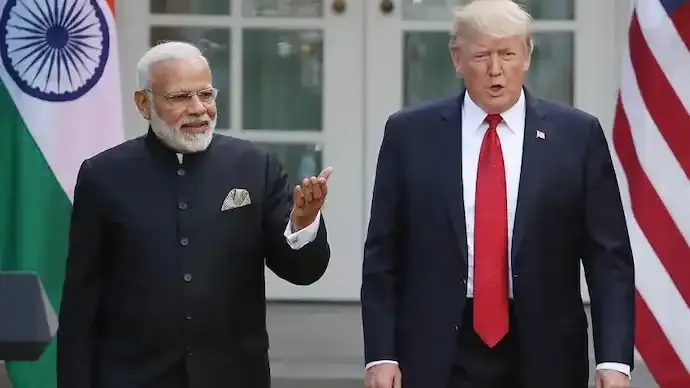

US President Donald Trump has warned countries against “playing games” on trade commitments after a Supreme Court ruling weakened his authority to impose sweeping global tariffs. The statement, posted on social media, came hours after India postponed a planned trade delegation visit to Washington, prompting speculation about whether the warning was directed at New Delhi.
The US Supreme Court ruling limited Trump’s ability to enforce global tariffs — a key negotiating tool he has used to pressure countries into trade agreements. Soon after the decision, Trump cautioned that nations attempting to exploit the ruling could face “much higher tariffs.”
Although no country was named, the timing of the remarks and India’s pause in trade negotiations have sparked debate among policy observers.

Why the tariff warning matters
Trump’s trade strategy has often relied on reciprocal tariffs to push negotiations forward. Following the court setback, the administration announced a temporary global import levy — initially 10%, later raised to 15% — valid for 150 days.
With tariff leverage weakened, analysts believe countries may reconsider agreements negotiated under pressure. Trump’s warning appears aimed at discouraging partners from renegotiating commitments.
Was the message aimed at India?
The speculation intensified after India deferred a scheduled visit by its trade delegation to finalise terms of an interim trade agreement announced earlier this month. Officials indicated the delay was a strategic pause rather than a withdrawal from negotiations.
Trump has frequently used the phrase “ripped off” when referring to trade imbalances with India, adding weight to suggestions that his latest comments could be aimed at New Delhi.
However, India is not alone in reassessing trade timelines. The European Union has also paused ratification of its trade agreement with the United States, reflecting broader uncertainty following the court ruling.
Negotiation space opens for India
The legal setback to reciprocal tariffs may give India additional negotiating room. Under the interim trade framework, if either side alters tariff commitments, the other is permitted to revise its obligations.
This clause could allow India to revisit certain commitments before a final agreement is concluded, potentially securing more favourable terms.
For India, the temporary 15% tariff is still lower than the previously negotiated 18% rate and significantly below the 50% tariff imposed last year amid disputes over energy purchases.
Strategic balancing for New Delhi
India now faces the challenge of balancing negotiation flexibility with maintaining stable ties with Washington. Trade relations between the two countries have experienced tensions in recent years but remain strategically significant.
Experts suggest India may benefit from avoiding rushed agreements while continuing negotiations that ensure long-term economic stability.
Global trade uncertainty grows
The evolving tariff landscape has introduced uncertainty into global trade dynamics. Countries are reassessing commitments, while the US administration seeks to preserve negotiating leverage.
Whether Trump’s warning was specifically directed at India remains unclear. However, the episode underscores the complex interplay between legal rulings, trade diplomacy, and geopolitical strategy.
As negotiations continue, both nations are expected to tread cautiously to protect economic interests while maintaining strategic partnerships.






Conversation
Be kind and stay on topic. Comments are moderated; abuse, spam and personal attacks are removed. Report a problem