

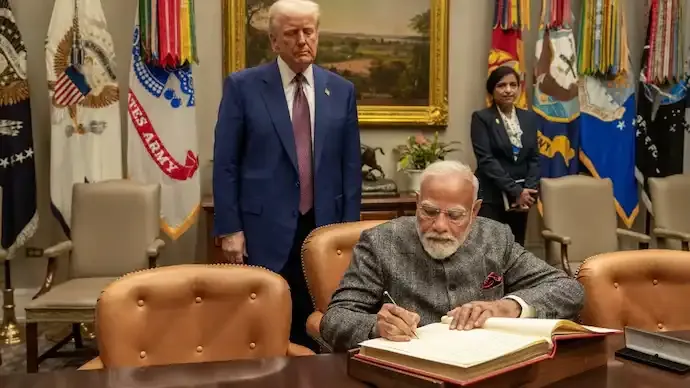

The proposed trade agreement between India and the United States continues to evolve ahead of its anticipated signing, with the administration of Donald Trump quietly revising portions of the official fact sheet to address contentious issues raised during negotiations. The latest changes signal ongoing backchannel discussions and suggest that both sides are working to smooth out sensitive provisions before finalising the deal expected around mid-March.
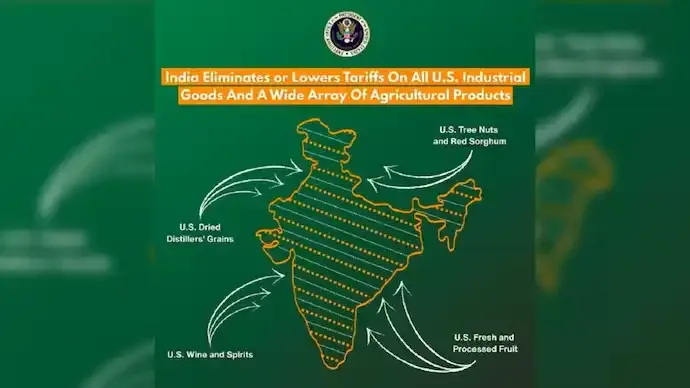
The updated fact sheet reflects several adjustments that appear to align more closely with India’s official position. One of the most significant revisions concerns agricultural trade, particularly pulses — a politically and economically sensitive sector for India’s domestic farming community. The earlier version of the document suggested that India would reduce or eliminate tariffs on certain US pulses. However, the revised text removes any direct reference to pulses, indicating that the matter may have been reconsidered during diplomatic consultations.
Trade observers note that pulses remain a critical commodity for India, which is among the world’s largest producers and consumers. Any commitment to lower tariffs had sparked debate, as it could have affected domestic farmers and market stability. The removal of the reference is widely seen as an attempt to reduce friction and avoid misunderstandings during the final phase of negotiations.

Another key change relates to India’s potential purchase of American goods. The initial fact sheet used strong language stating that India was “committed” to buying goods worth $500 billion from the United States over five years. In the revised version, the wording has been softened to “intends,” a subtle but significant shift that lowers the perception of binding obligations. Additionally, references to agricultural purchases have been scaled back, reflecting the sensitivity surrounding farm imports in India.
Digital trade provisions have also been adjusted. Earlier drafts suggested that India would remove its digital services tax, which applies to certain foreign technology companies operating in the country. The updated version instead states that both nations will negotiate broader digital trade rules aimed at reducing barriers and improving cooperation, without explicitly committing India to scrapping existing taxation measures.
Analysts believe these revisions demonstrate how diplomatic negotiations often hinge on precise language, with even minor wording changes carrying major economic implications. By recalibrating the fact sheet, Washington appears to be addressing concerns raised by New Delhi while keeping the broader framework of the agreement intact.
The evolving nature of the document suggests that negotiations remain active, with both countries seeking a balanced outcome that supports trade growth while protecting sensitive sectors. The agreement is expected to include tariff reductions on industrial goods, expanded market access, and stronger economic cooperation, though some unresolved issues — including energy imports and strategic commitments — may still require further clarity.
As the deadline for signing approaches, policymakers, businesses, and investors are closely monitoring developments to understand how the final version of the trade pact could reshape economic ties between the two major economies and influence global trade dynamics.




Conversation
Be kind and stay on topic. Comments are moderated; abuse, spam and personal attacks are removed. Report a problem