Shopping cart
Your cart empty!


Your cart empty!
Terms of use dolor sit amet consectetur, adipisicing elit. Recusandae provident ullam aperiam quo ad non corrupti sit vel quam repellat ipsa quod sed, repellendus adipisci, ducimus ea modi odio assumenda.
Lorem ipsum dolor sit amet consectetur adipisicing elit. Sequi, cum esse possimus officiis amet ea voluptatibus libero! Dolorum assumenda esse, deserunt ipsum ad iusto! Praesentium error nobis tenetur at, quis nostrum facere excepturi architecto totam.
Lorem ipsum dolor sit amet consectetur adipisicing elit. Inventore, soluta alias eaque modi ipsum sint iusto fugiat vero velit rerum.
Sequi, cum esse possimus officiis amet ea voluptatibus libero! Dolorum assumenda esse, deserunt ipsum ad iusto! Praesentium error nobis tenetur at, quis nostrum facere excepturi architecto totam.
Lorem ipsum dolor sit amet consectetur adipisicing elit. Inventore, soluta alias eaque modi ipsum sint iusto fugiat vero velit rerum.
Dolor sit amet consectetur adipisicing elit. Sequi, cum esse possimus officiis amet ea voluptatibus libero! Dolorum assumenda esse, deserunt ipsum ad iusto! Praesentium error nobis tenetur at, quis nostrum facere excepturi architecto totam.
Lorem ipsum dolor sit amet consectetur adipisicing elit. Inventore, soluta alias eaque modi ipsum sint iusto fugiat vero velit rerum.
Sit amet consectetur adipisicing elit. Sequi, cum esse possimus officiis amet ea voluptatibus libero! Dolorum assumenda esse, deserunt ipsum ad iusto! Praesentium error nobis tenetur at, quis nostrum facere excepturi architecto totam.
Lorem ipsum dolor sit amet consectetur adipisicing elit. Inventore, soluta alias eaque modi ipsum sint iusto fugiat vero velit rerum.
Do you agree to our terms? Sign up
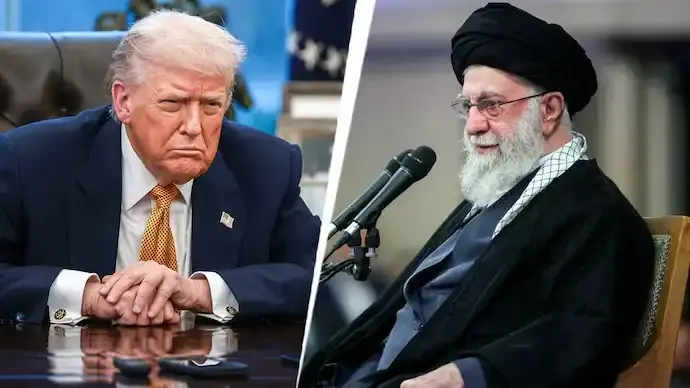
A series of rapid and high-stakes moves by the United States and Iran has sharply escalated tensions in the Middle East, sparking widespread speculation that a military strike on Tehran could be imminent. The developments include a partial US troop withdrawal from key regional bases, Iran’s sudden closure of its airspace, and increasingly aggressive warnings exchanged by both sides.
On Wednesday, the United States quietly pulled personnel from the Al Udeid Air Base in Qatar, the largest American military facility in the Middle East, which houses roughly 10,000 US troops. Qatari authorities described the move as a response to “current regional tensions.” Around the same time, the US Embassy in Kuwait instructed its personnel to temporarily halt visits to multiple military bases in the country, signalling heightened security concerns.
These precautionary steps followed a sharp warning from Tehran to neighbouring countries hosting American forces. Iranian authorities cautioned that US military installations in the region would be targeted if Washington launched an attack on Iranian soil. The threat came amid intensified international scrutiny of Iran’s violent crackdown on anti-regime protests, which has drawn repeated condemnation from Donald Trump.
Adding to the sense of urgency, Iran abruptly shut its airspace early Thursday, issuing a Notice to Airmen that halted most commercial flights except a limited number of approved international operations. Flight-tracking data showed Iranian and Iraqi skies rapidly emptying ahead of the closure. The shutdown has since been extended, further unsettling global aviation and diplomatic circles.
A Western military official has suggested that the pattern of moves could indicate preparations for a US strike, while cautioning that the Trump administration has historically used unpredictability as a strategic tool. According to the official, such manoeuvres are often intended to keep adversaries off balance rather than signal immediate action.
Despite the heightened tension, the precise timing and scale of any potential US military operation remain unclear. Reports citing European officials have suggested that intervention could occur within a short window, though no official confirmation has been issued. Shortly before Iran closed its airspace, Trump addressed reporters, saying he had been informed that killings linked to the Iranian crackdown were “stopping,” while also adopting a wait-and-watch approach.
Trump indicated that information from sources inside Iran suggested that large-scale executions were not imminent. While he did not rule out military action, he stressed that Washington would closely observe developments before taking further steps.
Behind the scenes, reports indicate that Trump has instructed his national security team that any military response must be swift and decisive, avoiding a prolonged conflict. Advisers, however, have reportedly raised concerns about the potential for strong Iranian retaliation and questioned whether sufficient US assets are currently positioned in the region to manage escalation.
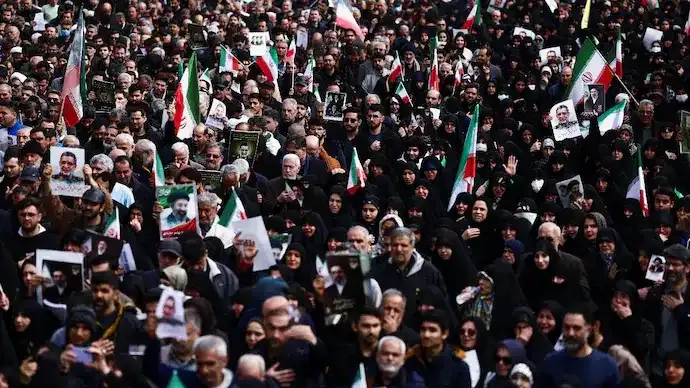
Meanwhile, the humanitarian situation inside Iran continues to deteriorate. Since December 28, mass protests against Ayatollah Ali Khamenei have gripped the country, driven by economic hardship, political repression, and public anger. Rights groups estimate that more than 2,600 people have been killed in the crackdown, with some placing the death toll even higher, making it one of the bloodiest periods of unrest since the 1979 Islamic Revolution.
As diplomatic channels strain and military signals intensify, the world is watching closely to see whether the current standoff will tip into direct confrontation or pull back from the brink.
85
Published: Jan 15, 2026

All India Story is your trusted source for comprehensive and up-to-the-minute news coverage across India. Bringing you the latest on politics, business, technology, entertainment, sports, and more, we are dedicated to keeping you informed with accurate, engaging, and insightful stories from every corner of the nation.