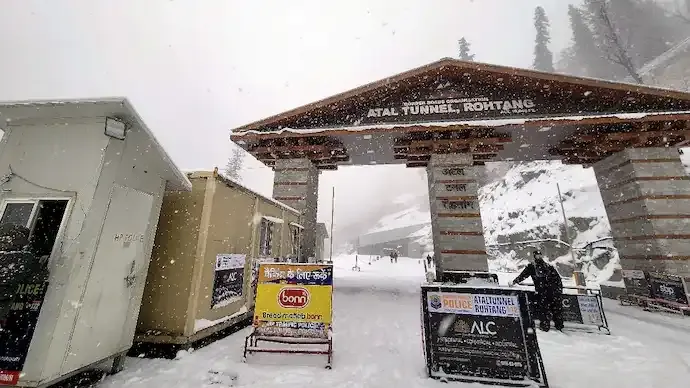
A sudden spell of snowfall across parts of the western Himalayas has surprised residents and tourists, bringing fresh snow to regions in Himachal Pradesh, Uttarakhand, and Jammu and Kashmir. The unexpected weather change in March has disrupted travel in several hill areas and led to emergency rescue efforts in some locations.
According to the India Meteorological Department (IMD), the unusual snowfall has been triggered by a fresh western disturbance moving across the Himalayan region. Western disturbances are weather systems that originate near the Mediterranean Sea and travel towards the Indian subcontinent, bringing rain and snowfall to northern India during the winter season.
Meteorologists explained that snowfall in March is generally considered off-season for the western Himalayas. Most of the region’s snowfall usually occurs between December and February, which are regarded as the peak winter months. However, the latest weather system has led to a sudden drop in temperatures and widespread snowfall in high-altitude areas.
One of the most affected locations has been the Manali region in Himachal Pradesh. Heavy snowfall near the Atal Tunnel at Rohtang Pass caused significant traffic disruptions, leaving nearly 1,000 vehicles stranded on mountain roads. Authorities quickly launched rescue operations to assist stranded travelers and ensure their safe movement.
Local administration teams, along with police and disaster response units, worked to clear snow-covered roads and guide vehicles to safer locations. Snow clearance operations were carried out to restore normal traffic movement in the affected areas.
The snowfall also affected other parts of the western Himalayan belt, including districts in Uttarakhand and several areas in Jammu and Kashmir. Many popular tourist destinations experienced a sudden change in weather, with snow covering roads, trees, and mountain slopes.
While the snowfall created temporary travel difficulties, it also attracted tourists eager to witness the scenic beauty of the snow-covered mountains. Many visitors in hill stations shared visuals of the fresh snowfall, showing landscapes transformed into white winter scenery.
Weather experts say western disturbances play a crucial role in shaping the winter climate of northern India. These systems are responsible for bringing precipitation that helps maintain snow cover in the Himalayan region and supports water resources that feed major rivers.
However, sudden snowfall events can also create challenges for transport and tourism in mountainous areas. Slippery roads, reduced visibility, and blocked routes often lead to traffic congestion and safety risks for travelers.
Authorities have advised tourists and drivers to remain cautious while travelling in snow-affected regions and to follow weather advisories issued by local administrations. Snow clearance teams are continuing operations in several affected areas to ensure safe movement of vehicles.
The recent weather development highlights the powerful impact of western disturbances on the Himalayan ecosystem. Even outside the peak winter season, these systems can bring significant snowfall, rapidly changing weather conditions across the mountainous regions of northern India.
As weather conditions stabilize, officials expect road connectivity to gradually improve while tourists continue to enjoy the rare off-season snowfall across the western Himalayas.
Prev Article
Melati Wijsen Calls for Bold Action Against Plastic Pollution
Next Article
March Rain and Snowfall Impact on Farmers: Benefit or Crop Damage?