

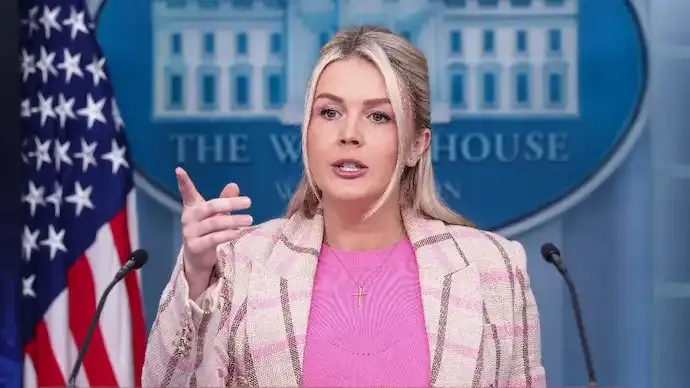

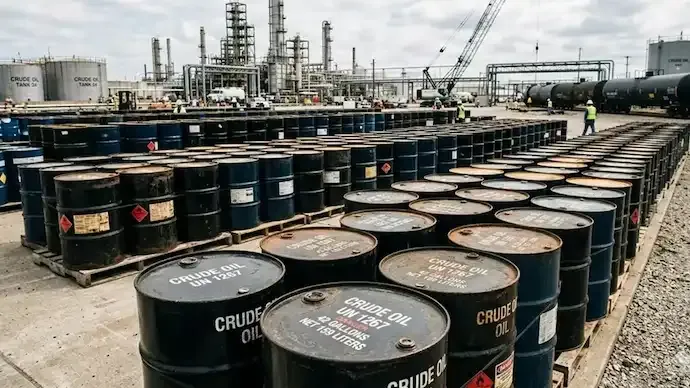
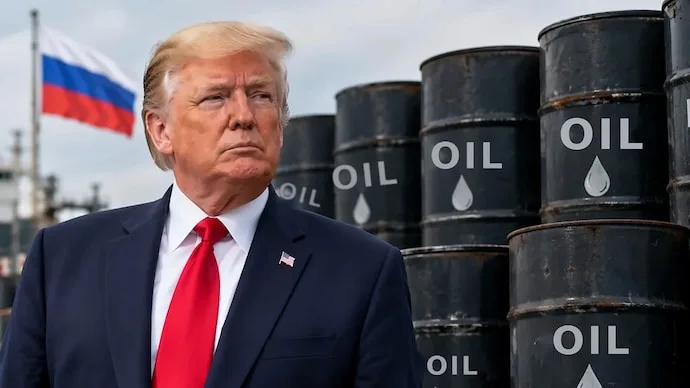
The United States has clarified that the recent decision allowing India to process certain Russian oil cargoes stranded at sea is only a temporary measure aimed at stabilising global energy markets and will not provide significant financial support to Russia.
The clarification came after Washington granted a short-term waiver allowing Indian refiners to handle Russian crude shipments that were already in transit.
Temporary Step to Stabilise Oil Markets
White House Press Secretary Karoline Leavitt explained that the waiver is intended to address disruptions in global oil supply caused by the ongoing conflict in the Middle East.

According to the statement, the measure is designed to ensure that oil supplies continue flowing into the global market during a period of geopolitical tension.
Officials emphasised that the waiver is limited in scope and duration, and it does not represent a change in the United States’ broader sanctions policy toward Russia.
Decision Taken After High-Level Discussions
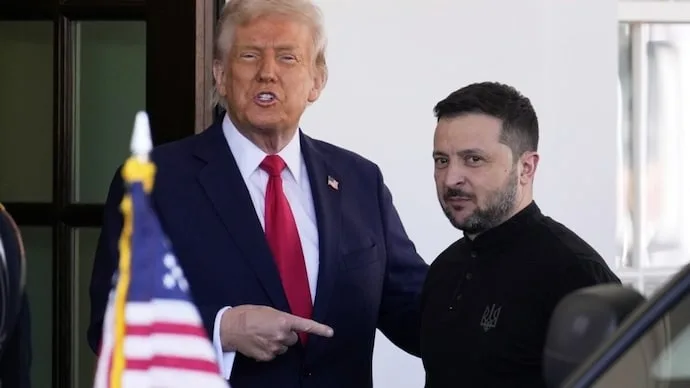
The White House confirmed that the decision followed consultations involving President Donald Trump, the US Treasury Department, and national security officials.
These discussions focused on managing potential energy supply disruptions that could affect global markets.
Authorities concluded that allowing stranded cargoes to be refined would help ease short-term supply pressure.
India’s Role in the Global Energy Market
India is among the largest importers of crude oil in the world, making its energy policies closely watched in global markets.
Officials noted that India has generally acted in accordance with international sanctions frameworks while balancing its energy needs.
Allowing Indian refineries to process stranded cargoes was therefore seen as a practical way to release oil already in the supply chain.
Impact of Middle East Conflict
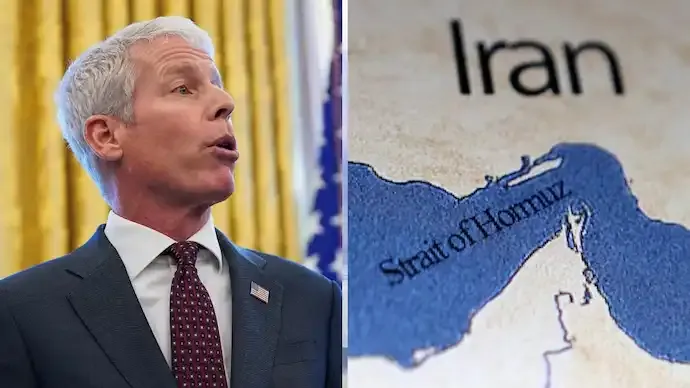
The waiver comes at a time when tensions in the Middle East have disrupted shipping routes and energy supplies.
Uncertainty surrounding oil transit through key maritime routes has increased volatility in global energy markets.
Analysts say the move could help stabilise prices in the short term by ensuring that oil already produced and transported is not left idle.
No Long-Term Policy Shift
US officials stressed that the decision should not be interpreted as a broader policy shift regarding Russia.
The waiver applies specifically to existing cargoes already at sea, rather than permitting new purchases.
Authorities reiterated that the objective is to prevent disruptions in global supply while maintaining pressure on Russia through existing sanctions.
The situation highlights the complex balance governments must maintain between geopolitical strategy and global energy stability during periods of international conflict.





Conversation
Be kind and stay on topic. Comments are moderated; abuse, spam and personal attacks are removed. Report a problem