

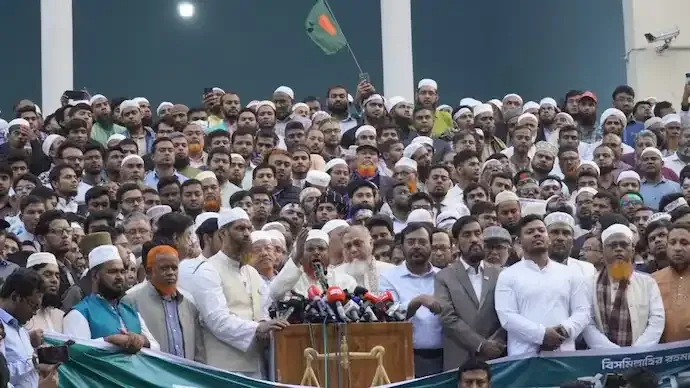

Bangladesh is witnessing rising political tension as a new government led by the Bangladesh Nationalist Party (BNP) prepares to assume power. On the day of the swearing-in ceremony, an alliance led by Jamaat-e-Islami and the National Citizens Party (NCP) warned of renewed street protests, raising fears of unrest similar to earlier anti-government movements.
The dispute revolves around the oath-taking process linked to the July Charter, a reform framework approved through a national referendum. While the BNP secured a sweeping parliamentary victory with a two-thirds majority in the February 12 elections, the July Charter referendum also passed with 62% voter approval.
Disagreement Over Constitutional Reform Oath
The July Charter proposes transforming Parliament into a Constituent Assembly for 180 days, empowering lawmakers to amend Bangladesh’s Constitution and restructure democratic institutions.

All newly elected Members of Parliament were expected to take two oaths — one as MPs and another as members of the Constitutional Reform Council responsible for implementing the Charter reforms.
However, BNP leaders announced that their MPs would not take the oath tied to the Constitutional Reform Council. Party leaders have expressed concerns about several provisions in the Charter, stating they were not adequately consulted during its drafting.
Jamaat and NCP Threaten Boycott and Protests
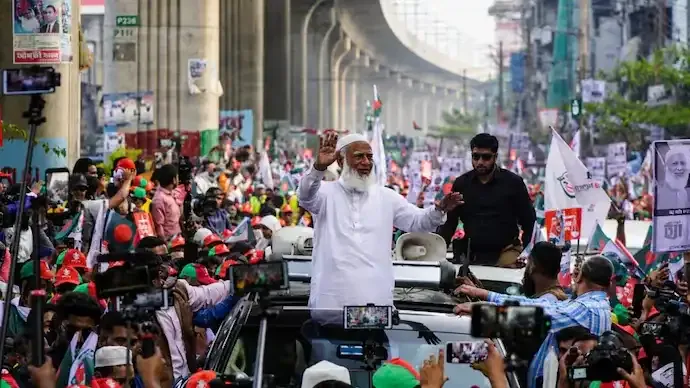
Jamaat-e-Islami and its alliance partner NCP have strongly opposed the BNP’s decision. Leaders from both parties warned they may boycott the oath-taking ceremony entirely if BNP lawmakers refuse to commit to the constitutional reform process.
Jamaat leaders stated that a Parliament without structural reforms would lack legitimacy. The NCP echoed this stance, indicating its elected representatives may also abstain from the oath if reform commitments are not honored.
The alliance further warned of nationwide street protests if their demands are ignored. Leaders referenced past mass movements, suggesting similar public mobilization could return.
Allegations and Rising Political Rhetoric
The situation has been intensified by allegations of electoral irregularities and post-election violence. Alliance leaders have also cited reports of violence against voters, using the incidents to justify calls for continued protest movements.
Political rhetoric has escalated, with opposition voices accusing the BNP of authoritarian tendencies. The use of terms associated with past protests signals growing polarization in the country’s political landscape.
Risk of Renewed Street Agitations
Bangladesh has experienced significant political mobilization in recent years, and analysts warn that unresolved disputes over constitutional reforms could trigger fresh demonstrations.
The unfolding standoff highlights deep divisions over governance reforms, electoral legitimacy, and the future structure of democratic institutions. The coming days will be crucial in determining whether negotiations prevail or tensions spill into mass protests.




Conversation
Be kind and stay on topic. Comments are moderated; abuse, spam and personal attacks are removed. Report a problem