

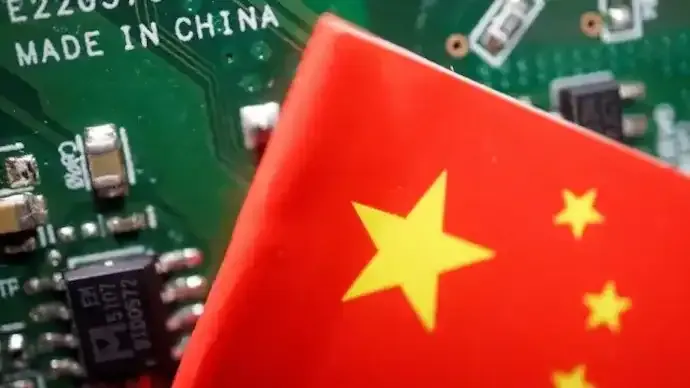

China has quietly built a high-security prototype capable of producing advanced semiconductor chips, a technological breakthrough that directly challenges the West’s long-held monopoly over artificial intelligence and military-grade chip manufacturing, according to a Reuters investigation.
The development, carried out in a heavily guarded laboratory in Shenzhen, marks the most significant advance yet in Beijing’s push for semiconductor self-sufficiency, a top strategic priority of President Xi Jinping.
China’s ‘Manhattan Project’ for Chips
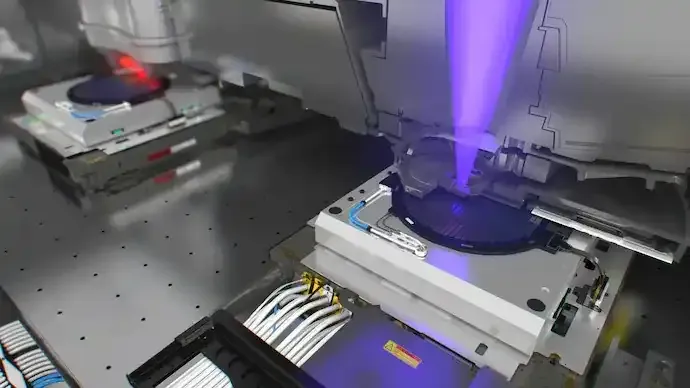
The prototype machine, completed in early 2025 and currently under testing, is designed to replicate extreme ultraviolet (EUV) lithography—the most advanced chipmaking technology in the world. Until now, this capability has been exclusively held by Dutch firm ASML, whose machines are critical for manufacturing cutting-edge chips used in AI systems, smartphones and modern weapons.

Sources familiar with the project described it as China’s version of the Manhattan Project, involving thousands of engineers, state research institutes and major technology firms, coordinated under strict secrecy.
The EUV prototype was reportedly built by former ASML engineers, many working under aliases, who reverse-engineered older machines using components sourced from secondary markets. While the prototype can successfully generate extreme ultraviolet light, it has not yet produced functional chips.
Closer to Chip Independence Than Expected
For years, US and allied export controls were designed to keep China at least a generation behind in semiconductor technology. However, the existence of an operational EUV prototype suggests China may be years ahead of analysts’ expectations.
China’s internal target is to produce working chips by 2028, though experts involved believe 2030 is a more realistic timeline—still far sooner than earlier estimates that placed parity a decade away.
Despite progress, China continues to face major challenges, especially in replicating precision optical systems, traditionally supplied by Germany’s Carl Zeiss, which are essential for EUV lithography.
Huawei at the Centre of the Effort
Chinese tech giant Huawei plays a key coordinating role across the semiconductor supply chain, from chip design to fabrication equipment. Sources said Huawei scientists work in tightly controlled environments, often sleeping on-site, with restricted communication to maintain secrecy.
Huawei CEO Ren Zhengfei is said to regularly brief senior Chinese leadership on progress. The company has been under US sanctions since 2019, severely limiting its access to advanced chips.
Western Response and Security Concerns
The United States began pressuring the Netherlands in 2018 to block ASML from selling EUV machines to China, a move later reinforced by sweeping US export controls under successive administrations. No EUV system has ever been legally sold to China.
Dutch intelligence agencies have repeatedly warned about Chinese efforts to acquire sensitive technology through recruitment and espionage. European governments are now considering tighter personnel screening at research institutions to prevent knowledge leaks.
ASML, which spent nearly two decades developing EUV technology, acknowledged the challenge but maintained that replicating the system remains extremely difficult.
“Doing so is no small feat,” the company said, noting that even within ASML, access to EUV knowledge is tightly restricted.
Strategic Implications
If China succeeds, it would fundamentally reshape the global semiconductor landscape, weaken Western leverage through export controls, and accelerate Beijing’s ability to produce advanced AI and military chips domestically.
The breakthrough underscores how technological decoupling is driving parallel innovation paths, intensifying what analysts increasingly describe as a global chip Cold War.






Conversation
Be kind and stay on topic. Comments are moderated; abuse, spam and personal attacks are removed. Report a problem