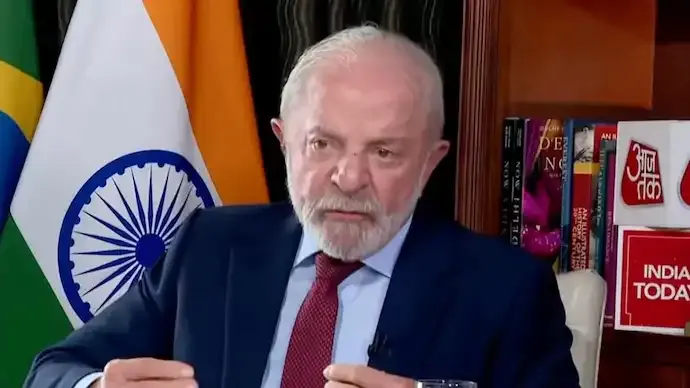
Brazilian President Luiz Inácio Lula da Silva has suggested that India and Brazil could conduct bilateral trade using their own currencies instead of relying solely on the US dollar, signalling a potential shift in how emerging economies manage international trade. He stressed, however, that any transition away from the dollar-dominated system must be gradual, practical, and carefully planned.
Speaking about strengthening economic cooperation between the two nations, Lula said trade agreements do not necessarily need to be denominated in US dollars. He acknowledged the complexity of such a shift but encouraged exploring alternatives that could give both countries greater financial flexibility.
“It is not necessary that trade between India and Brazil be conducted in US dollars. We can use our own currencies. It is difficult, but we can try,” Lula said, adding that dismantling the current global system overnight is neither realistic nor advisable.
Dollar dominance and global realities
Lula recognised the strong position of the US dollar in global finance and said it is natural for the United States to protect its currency’s dominance. He noted that while countries may seek alternatives, they must consider global economic realities and the stability provided by the existing system.
He emphasised that exploring local-currency trade is not an attempt to disrupt global financial stability but rather a step toward strengthening economic autonomy among developing nations.
No plan for a BRICS common currency
Addressing speculation about a BRICS common currency, Lula clarified that no such proposal currently exists. He stated there has been no formal discussion, draft, or internal proposal within the grouping to introduce a shared currency.
He described the idea as widely misunderstood but reiterated that BRICS nations should increase trade in local currencies wherever feasible. According to Lula, countries should evaluate whether every transaction requires the dollar or if bilateral currency settlements could be more efficient.
BRICS and the Global South
Lula described BRICS as a major platform representing the Global South and emphasised its growing geopolitical importance. With India and China accounting for a significant share of the global population, he said the grouping reflects the voices and priorities of developing nations.
He stressed Brazil’s commitment to multilateral cooperation and said the country does not support a divided global order. Instead, Brazil seeks to maintain trade relations with all nations while promoting balanced global growth.
Expanding India–Brazil economic ties
Looking ahead, Lula highlighted the potential to significantly expand bilateral trade between India and Brazil, setting a target of $30–40 billion. He praised India’s technological ecosystem and said Brazil is keen to learn from India’s innovation-led growth.
He also revealed that Brazilian aerospace manufacturer Embraer plans to establish a manufacturing facility in India, signalling deeper industrial cooperation and diversification of supply chains beyond traditional partners.
Lula concluded that stronger economic growth in both countries will naturally boost trade, investment, and technological collaboration, strengthening a partnership built on trust, shared development goals, and mutual opportunity.
Prev Article
India Catching Up With US & China in AI Race, Says IndiaAI CEO Abhishek Singh
Next Article
AI Like a Tsunami for Jobs Market, Warns IMF Chief Kristalina Georgieva