

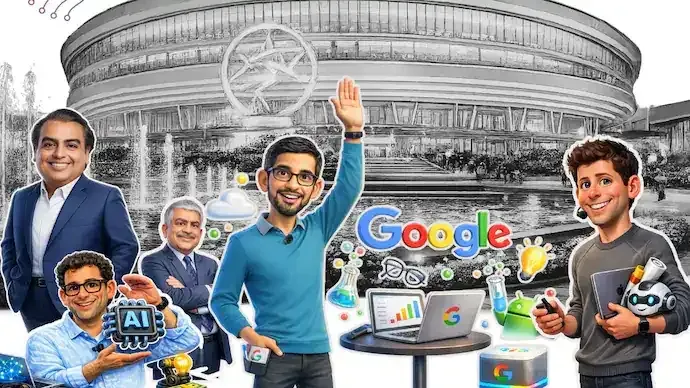

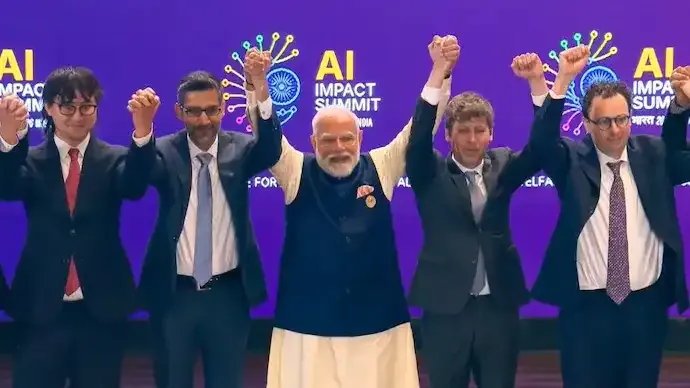
The India AI Impact Summit 2026 brought together some of the world’s most influential voices in artificial intelligence, generating global headlines on technology, innovation, and digital transformation. Yet beyond the major announcements and official statements, several nuanced remarks from global leaders may carry deeper long-term implications for governance, policy, and the future of work.
At high-level forums, it is often the understated observations — not the headline promises — that reveal emerging shifts in global thinking. During keynote speeches and panel discussions, leaders offered insights that could influence how societies adapt to AI-driven transformation.
Rethinking the social contract in an AI era
One of the most striking remarks came from OpenAI CEO Sam Altman, who suggested that the rise of AI may compel nations to reconsider the traditional social contract between citizens and the state. He noted that policymakers may need to rethink governance structures as AI reshapes economies, labour markets, and societal systems.

The comment raised deeper questions: Will AI only change industries and lifestyles, or could it fundamentally reshape governance models? The idea that democratic and administrative systems may evolve under AI acceleration reflects growing uncertainty about how societies will adapt to rapid technological change.
Humanities and ethics gain importance
Google DeepMind CEO Demis Hassabis highlighted the growing importance of artists, social scientists, and philosophers in shaping the AI-driven future. He emphasised that decision-making, ethics, and policy judgments often involve ambiguity and contextual understanding — areas where AI systems still struggle.
His remarks suggest that humanities and social sciences could gain strategic relevance in an AI-dominated world. As technology advances, skills rooted in ethics, creativity, and human judgment may become key differentiators for future professionals.
Managing disruption in a fast-moving AI economy
Anthropic CEO Dario Amodei warned that the speed of AI advancement could trigger economic disruption if not managed carefully. He stressed the need for cooperation between governments and technology companies to manage the transition period effectively.
While acknowledging AI’s potential to significantly expand economic growth, he cautioned that short-term disruptions could be severe without coordinated policy responses. The focus, he suggested, should not be on whether disruption will occur, but on how it is managed.
Europe positions itself as a safe AI innovation space
France’s leadership used the summit to emphasise Europe’s ambition to balance innovation with regulation. The message underscored Europe’s intent to position itself as a secure and trustworthy environment for AI development while maintaining strong regulatory safeguards.
This approach reflects a broader geopolitical strategy in which regulatory trust and digital sovereignty may become competitive advantages in the global AI ecosystem.
AI sovereignty and national infrastructure
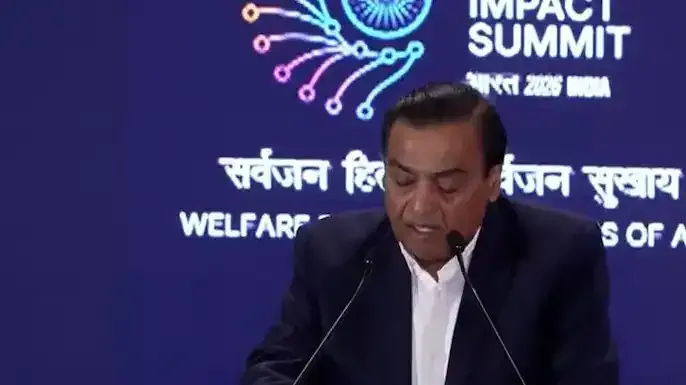
Indian industry voices highlighted the importance of building sovereign AI infrastructure. Jeet Adani, Director at Adani Digital Labs, described AI as a nation-building tool that integrates energy systems, computing power, and digital infrastructure into a unified national framework.
He framed this vision as a form of modern nationalism, suggesting that AI is no longer just a technological initiative but a strategic foundation for economic resilience and national competitiveness.
Subtle signals with lasting impact
While the summit focused on technological progress, the underlying themes pointed to broader transformations in governance, workforce dynamics, geopolitical positioning, and national strategy.
As AI continues to reshape economies and societies, these nuanced insights may prove more influential than headline announcements, offering a glimpse into how power, policy, and professions could evolve in the years ahead.





Conversation
Be kind and stay on topic. Comments are moderated; abuse, spam and personal attacks are removed. Report a problem