Shopping cart
Your cart empty!


Your cart empty!
Terms of use dolor sit amet consectetur, adipisicing elit. Recusandae provident ullam aperiam quo ad non corrupti sit vel quam repellat ipsa quod sed, repellendus adipisci, ducimus ea modi odio assumenda.
Lorem ipsum dolor sit amet consectetur adipisicing elit. Sequi, cum esse possimus officiis amet ea voluptatibus libero! Dolorum assumenda esse, deserunt ipsum ad iusto! Praesentium error nobis tenetur at, quis nostrum facere excepturi architecto totam.
Lorem ipsum dolor sit amet consectetur adipisicing elit. Inventore, soluta alias eaque modi ipsum sint iusto fugiat vero velit rerum.
Sequi, cum esse possimus officiis amet ea voluptatibus libero! Dolorum assumenda esse, deserunt ipsum ad iusto! Praesentium error nobis tenetur at, quis nostrum facere excepturi architecto totam.
Lorem ipsum dolor sit amet consectetur adipisicing elit. Inventore, soluta alias eaque modi ipsum sint iusto fugiat vero velit rerum.
Dolor sit amet consectetur adipisicing elit. Sequi, cum esse possimus officiis amet ea voluptatibus libero! Dolorum assumenda esse, deserunt ipsum ad iusto! Praesentium error nobis tenetur at, quis nostrum facere excepturi architecto totam.
Lorem ipsum dolor sit amet consectetur adipisicing elit. Inventore, soluta alias eaque modi ipsum sint iusto fugiat vero velit rerum.
Sit amet consectetur adipisicing elit. Sequi, cum esse possimus officiis amet ea voluptatibus libero! Dolorum assumenda esse, deserunt ipsum ad iusto! Praesentium error nobis tenetur at, quis nostrum facere excepturi architecto totam.
Lorem ipsum dolor sit amet consectetur adipisicing elit. Inventore, soluta alias eaque modi ipsum sint iusto fugiat vero velit rerum.
Do you agree to our terms? Sign up

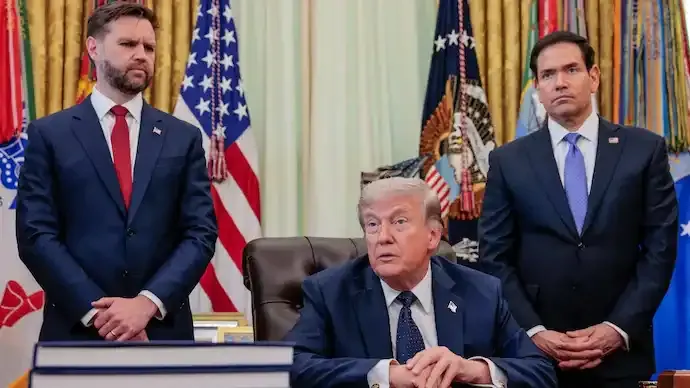
India may have quietly pushed back against the United States in the ongoing trade standoff by imposing a 30% import tariff on US pulses, a move that has now drawn attention from American lawmakers. The issue surfaced after two US senators urged President Donald Trump to intervene and pressure India to roll back what they described as “unfair” duties on American agricultural exports.
The development comes at a time when the long-pending India–US trade agreement remains stalled, with agriculture emerging as a sensitive flashpoint. Pulses, a dietary staple in India and a major export commodity for several US states, are now at the centre of fresh friction between the two countries.
In a letter dated January 16, US senators Kevin Cramer and Steve Daines highlighted that India imposed a 30% tariff on yellow peas imported from the US on October 30 last year, with the duty coming into effect from November 1. The senators said the measure has put American pulse producers at a serious competitive disadvantage in one of their largest potential markets.
The tariff decision was not publicly highlighted by New Delhi, leading analysts to describe it as a low-profile but deliberate response to the punitive 50% tariffs imposed by the Trump administration on Indian goods last year. Observers have termed the move a “silent retaliation” that reflects India’s cautious approach to managing strained bilateral ties.
The matter holds particular importance for agricultural states like North Dakota and Montana, which are among the top producers of peas and pulses in the US. India, on the other hand, is the world’s largest consumer of pulses, accounting for nearly 27% of global consumption. Lentils, chickpeas, dried beans, and peas form a core part of the Indian diet, making the sector politically and economically sensitive.
The senators argued that while India consumes large quantities of pulses, it has maintained high tariffs on American produce, limiting access for US farmers. They also pointed out that this issue had surfaced during Trump’s first term, when similar concerns were raised during trade negotiations.
During the 2020 trade discussions, the same senators had written to Trump about what they called unfair Indian tariffs after New Delhi was removed from the US Generalised System of Preferences in 2019. Trump later hand-delivered that letter to Prime Minister Narendra Modi during talks, an episode that coincided with his high-profile India visit and the “Namaste Trump” event in Ahmedabad.
Despite the optics of personal rapport between Modi and Trump, many trade irritants remained unresolved, with agriculture consistently proving to be a tough negotiating area.
Trade experts say the latest pulse tariff reflects India’s firm stance on protecting domestic farmers. Opening up agricultural and dairy markets has long been a red line for New Delhi, especially in the context of electoral politics and rural livelihoods.
Analysts note that India has, in the past, temporarily reduced import duties on certain pulses to control food inflation, particularly ahead of elections. However, they stress that any trade deal perceived to undermine Indian farmers would face strong resistance, regardless of diplomatic pressure.
The pulse tariff episode adds another layer of complexity to already delicate India–US trade negotiations. While Washington is pushing for wider market access, New Delhi appears determined to defend its domestic priorities, even if that means quietly pushing back against US trade actions.
As both sides reassess their positions, pulses—an everyday food item—have emerged as a symbol of the broader strategic and economic balancing act shaping the India–US relationship.
123
Published: Jan 17, 2026

All India Story is your trusted source for comprehensive and up-to-the-minute news coverage across India. Bringing you the latest on politics, business, technology, entertainment, sports, and more, we are dedicated to keeping you informed with accurate, engaging, and insightful stories from every corner of the nation.