

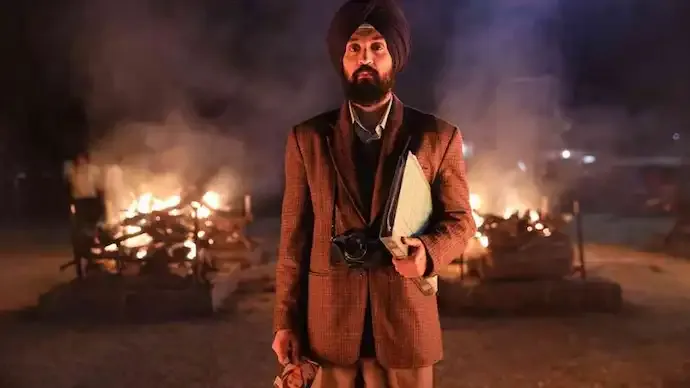

Since its release, Diljit Dosanjh's Satluj has generated intense public debate, with some critics alleging that the film promotes a pro-Khalistan narrative. However, a closer look at the story reveals a different focus.
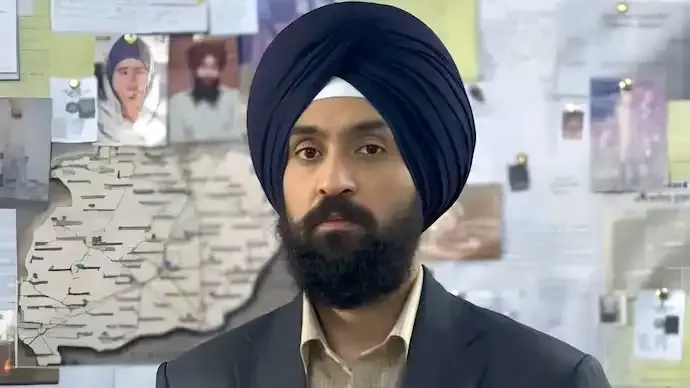
Directed by Honey Trehan, Satluj is centred on the life and work of human rights activist Jaswant Singh Khalra, whose investigation into alleged illegal cremations and disappearances during Punjab's counter-insurgency years forms the emotional core of the film.
Rather than advocating any political ideology, the film largely examines questions of accountability, justice and the human consequences of one of Punjab's most turbulent periods.

What is Satluj about?
The film follows Jaswant Singh Khalra's efforts to uncover allegations that thousands of unidentified bodies were cremated without proper records during the militancy era in Punjab.
Instead of presenting a sweeping account of the Khalistan movement or the insurgency itself, Satluj narrows its focus to one documented human rights investigation.
Its central question is straightforward:
What happened to those who disappeared, and who should be held accountable?
Throughout its runtime, the narrative repeatedly returns to missing persons, grieving families and official records rather than ideological debates.
Why has the film sparked controversy?
The controversy largely stems from the historical period in which the story is set.
Punjab's militancy years remain one of the most politically sensitive chapters in modern Indian history. As a result, films dealing with this era are often viewed through contemporary political lenses.
Critics questioning Satluj have argued that revisiting the period could influence public perceptions of the Khalistan movement.
Supporters, however, contend that the film focuses on documented human rights concerns rather than separatist politics.
Does the film focus on Khalistan?
One of Satluj's most notable creative choices is that it does not make the demand for Khalistan its central theme.
Instead:
- Militancy remains the backdrop.
- Human rights investigations drive the narrative.
- Missing persons and alleged extrajudicial killings remain the central conflict.
- Families searching for answers become the emotional focus.
The film largely avoids lengthy discussions about separatist ideology, instead concentrating on the consequences of violence and the search for accountability.
The significance of Jaswant Singh Khalra
The choice of Jaswant Singh Khalra as the film's protagonist shapes its perspective.
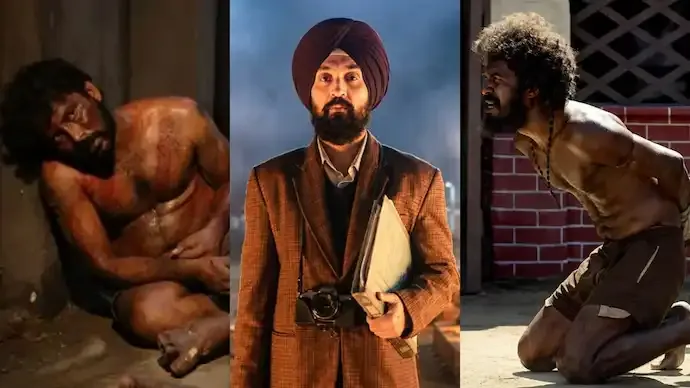
Khalra is portrayed not as a political leader or militant, but as a human rights activist committed to documenting disappearances and alleged illegal cremations.
His work revolves around:
- Government records
- Cremation registers
- Affidavits
- Witness accounts
- Missing persons investigations
The film presents documentation—not armed conflict—as the primary instrument in the search for justice.
Accountability emerges as the central theme
Throughout the story, Satluj repeatedly raises questions about accountability during Punjab's counter-insurgency operations.
Rather than asking why militancy emerged, the film largely explores:
- How counter-insurgency measures were conducted.
- Whether alleged abuses were investigated.
- The impact on ordinary families.
- The importance of preserving historical records.
The recurring message is that democratic societies must balance security measures with accountability and the rule of law.
Historical context remains in the background
The narrative references major historical events, including:
- Operation Blue Star.
- The 1984 anti-Sikh riots.
- Punjab's insurgency.
- The assassination of Punjab Chief Minister Beant Singh.
However, these events largely serve as historical context rather than the primary subject of the film.
The screenplay consistently shifts attention back to families searching for answers and official investigations into disappearances.
Why the film continues to divide opinion
Historical dramas often generate differing interpretations, particularly when they deal with unresolved political events.
For some viewers, Satluj represents an important conversation about human rights and institutional accountability.
Others believe any portrayal of Punjab's militancy period inevitably intersects with broader political debates surrounding separatism and national security.
These differing perspectives explain why the film has attracted both praise and criticism.
Streaming controversy
Satluj was released on ZEE5 but was removed from the platform within 48 hours of its release.
Its removal has further intensified discussions surrounding the film, although the reasons behind the takedown have become a subject of public and political debate.
Featured Snippet
Satluj, starring Diljit Dosanjh as human rights activist Jaswant Singh Khalra, primarily explores alleged disappearances, illegal cremations and accountability during Punjab's counter-insurgency years. While set against the backdrop of the militancy era, the film focuses more on human rights and documentation than on advocating any political ideology.
Key Highlights
- Satluj stars Diljit Dosanjh as Jaswant Singh Khalra.
- The film centres on alleged disappearances and illegal cremations in Punjab.
- Khalistan is largely treated as historical context rather than the main subject.
- Accountability and human rights form the film's central themes.
- The story is based on Khalra's documented investigations.
- The film has generated political debate over its interpretation.
- Satluj was removed from ZEE5 within 48 hours of release.
Conclusion
Satluj enters one of India's most sensitive historical conversations through the lens of a documented human rights investigation rather than ideological advocacy. By focusing on missing persons, official records and demands for accountability, the film raises questions about justice and historical memory during Punjab's counter-insurgency years. Whether audiences interpret it as a human rights drama or through the prism of broader political debates reflects the continuing complexity of Punjab's history and its lasting impact on public discourse.
FAQs
1. What is Satluj about?
The film follows human rights activist Jaswant Singh Khalra's investigation into alleged illegal cremations and disappearances during Punjab's counter-insurgency period.
2. Does Satluj promote the Khalistan movement?
The film primarily focuses on alleged human rights violations and accountability rather than advocating any political ideology.
3. Who plays Jaswant Singh Khalra in Satluj?
Diljit Dosanjh portrays the late human rights activist.
4. Who directed Satluj?
The film is directed by Honey Trehan.
5. Why is Satluj controversial?
The film revisits Punjab's militancy years, a politically sensitive period that continues to generate differing public interpretations.
6. What are the main themes of the film?
Human rights, accountability, missing persons, historical memory and justice are the central themes.
7. Why was Satluj removed from ZEE5?
The film was taken down from the streaming platform within 48 hours of its release. The removal itself has become part of the wider public debate.
8. Is Satluj based on real events?
The story is inspired by the documented work of Jaswant Singh Khalra and the investigations surrounding alleged illegal cremations during Punjab's counter-insurgency period.




Conversation
Be kind and stay on topic. Comments are moderated; abuse, spam and personal attacks are removed. Report a problem