

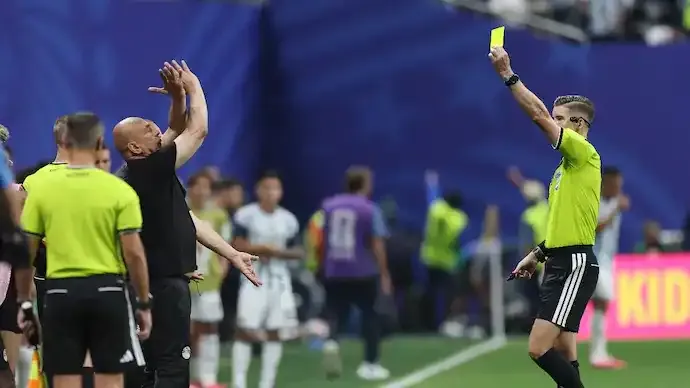

Egypt head coach Hossam Hassan found himself at the centre of controversy after receiving a yellow card for making FIFA's official anti-racism gesture during his side's dramatic 3-2 FIFA World Cup Round of 16 defeat to Argentina.
The incident occurred during a tense closing phase of the match at Atlanta Stadium, where emotions boiled over following a contentious VAR decision and Argentina's remarkable comeback from two goals down.
The caution has raised fresh questions over the interpretation of FIFA's anti-racism protocol and the refereeing decisions that shaped one of the tournament's most dramatic knockout encounters.

Why was Hossam Hassan booked?
As frustration mounted among Egyptian players and coaching staff, Hassan stepped towards French referee Francois Letexier and crossed his forearms to form an "X" sign.
The gesture is recognised under FIFA's anti-racism campaign as a universal signal that players, coaches or team officials can use to report alleged racist abuse during a match.
Instead of stopping play, Letexier immediately showed Hassan a yellow card and allowed the match to continue.
Neither FIFA nor the match officials have publicly explained why the Egypt coach was cautioned.
What does FIFA's anti-racism gesture mean?
FIFA introduced the crossed-arms "X" gesture as part of its strengthened anti-racism framework.
The signal allows players, coaches and officials to alert referees if they believe racist abuse has taken place.
Once recognised, referees may activate FIFA's three-step anti-racism protocol:
Step 1: Temporary suspension
The referee can pause play while security officials identify the source of the alleged abuse.
Step 2: Match suspension
If the discriminatory behaviour continues, players may be taken off the field temporarily.
Step 3: Match abandonment
In extreme situations where racist abuse persists despite warnings, the referee has the authority to abandon the match entirely.
The protocol has become one of FIFA's most prominent anti-discrimination initiatives in international football.
Chaos follows controversial VAR decision
The incident came shortly after one of the game's biggest talking points.
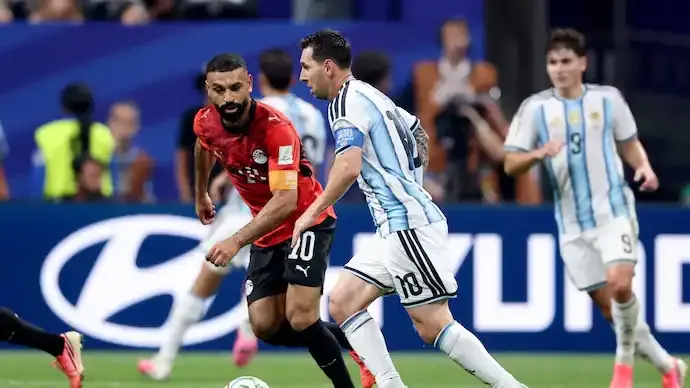
Egypt believed they had doubled their advantage when Mostafa Ziko finished an excellent attacking move involving Mohamed Salah.
However, after reviewing the build-up, referee Francois Letexier ruled that Lisandro Martinez had been fouled earlier in the attacking phase.
The goal was overturned following the VAR review.
The decision sparked furious protests from Egyptian players, coaching staff and supporters.
Several members of Egypt's bench received yellow cards, while one official was sent off during stoppage time.
Argentina complete remarkable comeback
Egypt appeared in complete control after taking a two-goal lead.
However, Argentina gradually fought their way back into the contest.
The defending champions scored through:
- Cristian Romero
- Lionel Messi
- Enzo Fernandez, whose late header completed the comeback
The victory secured Argentina's place in the FIFA World Cup quarter-finals and kept alive their hopes of defending the title.
Experts question VAR consistency
While there has been no evidence suggesting any manipulation of the match, the refereeing decisions have generated significant debate.
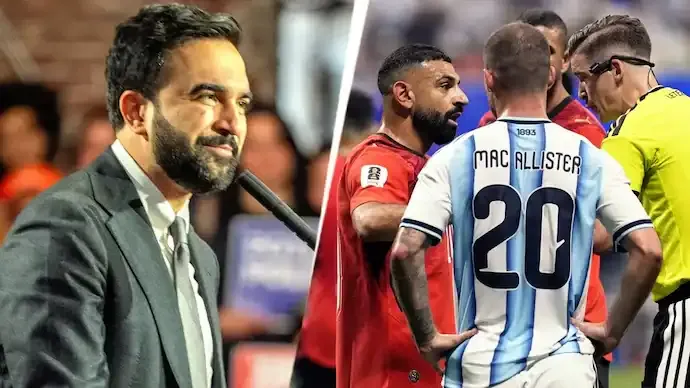
Egyptian football analyst Ahmad Yousef, speaking after the match, questioned the consistency of VAR intervention.
According to Yousef, the challenge involving Lisandro Martinez appeared minimal, and too much play had elapsed before the review overturned Egypt's goal.
His comments echoed broader concerns among football fans regarding the consistency with which VAR is applied during major tournaments.
No evidence supports match-fixing claims
Social media witnessed widespread speculation following the controversial decisions.
However, there is no evidence to suggest the match was manipulated or that officials deliberately favoured Argentina.
The debate has instead centred on the interpretation of VAR protocols and the consistency of refereeing decisions.
Argentina march into the quarter-finals
Despite surviving one of their toughest tests of the tournament, Argentina advanced to the last eight, where they will face Switzerland.
Egypt, meanwhile, leave the competition with plenty of pride for their performance but lingering disappointment over the officiating controversies that overshadowed an impressive display.
Featured Snippet
Egypt coach Hossam Hassan received a yellow card after making FIFA's official anti-racism gesture during Egypt's 3-2 World Cup defeat to Argentina. The incident followed a controversial VAR decision and has sparked widespread debate about officiating and FIFA's anti-racism protocol.
Key Highlights
- Egypt coach Hossam Hassan received a yellow card during the Argentina match.
- Hassan made FIFA's official anti-racism "X" gesture.
- Referee Francois Letexier did not activate FIFA's anti-racism protocol.
- Egypt protested a controversial VAR decision that ruled out a goal.
- Argentina came back from 2-0 down to win 3-2.
- Lionel Messi and Enzo Fernandez played key roles in the comeback.
- FIFA has not explained why Hassan was booked.
- Argentina advance to the World Cup quarter-finals.
Conclusion
Hossam Hassan's booking has become one of the most debated moments of the FIFA World Cup knockout stage. While the anti-racism gesture was introduced to strengthen football's response to discrimination, the decision to caution the Egypt coach without publicly explaining the reasoning has raised fresh questions about protocol implementation. Combined with controversial VAR decisions, the incident has ensured that discussions surrounding the match continue long after the final whistle.
FAQs
1. Why was Egypt coach Hossam Hassan booked?
He received a yellow card after making FIFA's official anti-racism "X" gesture during the match against Argentina.
2. What does FIFA's anti-racism gesture mean?
The crossed-arms "X" gesture is used by players and coaches to alert referees about alleged racist abuse.
3. Did FIFA explain the yellow card?
No. FIFA and the match officials have not publicly explained why Hassan was cautioned.
4. Why was Egypt angry with VAR?
A goal scored by Mostafa Ziko was disallowed after VAR ruled there had been a foul on Lisandro Martinez during the build-up.
5. Did Argentina win the match?
Yes. Argentina recovered from 2-0 down to defeat Egypt 3-2.
6. Is there evidence that the match was fixed?
No. There is no evidence supporting claims that the match was manipulated.
7. Who officiated the match?
French referee Francois Letexier was the match official.
8. Who will Argentina face next?
Argentina will meet Switzerland in the FIFA World Cup quarter-finals.




Conversation
Be kind and stay on topic. Comments are moderated; abuse, spam and personal attacks are removed. Report a problem