

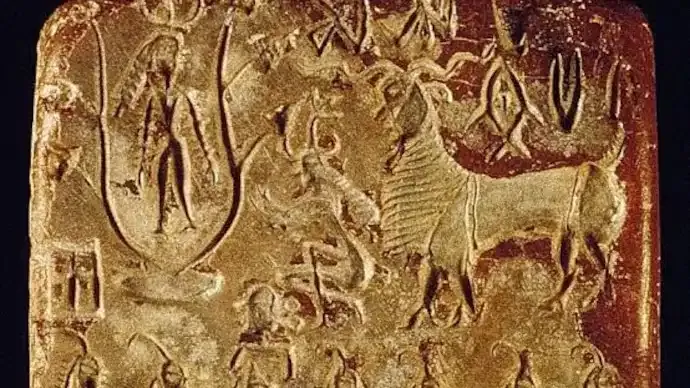

The New Year of Harappa imagines how the Indus Valley Civilisation may have marked the beginning of a new year around 2400 BCE through careful observation of the sky rather than calendars or clocks. Set in the city of Harappa, the narrative centres on the heliacal rising of the Krittika nakshatra (the Pleiades or “Seven Sisters”), whose brief reappearance before dawn after weeks of invisibility may have signalled the completion of a yearly cosmic cycle.
The story explains how the Harappans, though lacking modern scientific language, likely understood seasonal cycles through long-term astronomical observation. When the Pleiades reappeared just before sunrise—around the time of the vernal equinox—it marked a reliable reset point for agriculture, trade, ritual cleansing, and civic life. This celestial event reassured the society that the universe remained orderly and predictable.
Rather than portraying superstition, the article frames this practice as empirical knowledge rooted in observation, geometry, and survival. It suggests that the alignment of season, constellation, and nakshatra formed an ancient “New Year system” based on astronomy.

The author notes that this interpretation is speculative but grounded in archaeological evidence, particularly an Indus seal (M.2430) depicting seven figures, which some scholars believe references the Pleiades. While Harappan beliefs remain undeciphered, the piece highlights their advanced understanding of nature, engineering, and the sky—and imagines a civilisation that began its year by trusting the stars to return, just as they always had.








Conversation
Be kind and stay on topic. Comments are moderated; abuse, spam and personal attacks are removed. Report a problem