

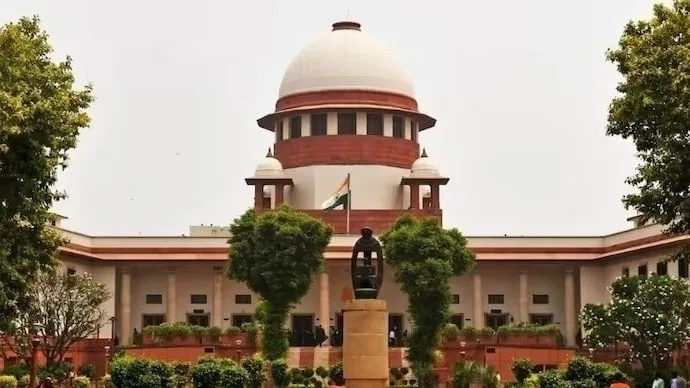

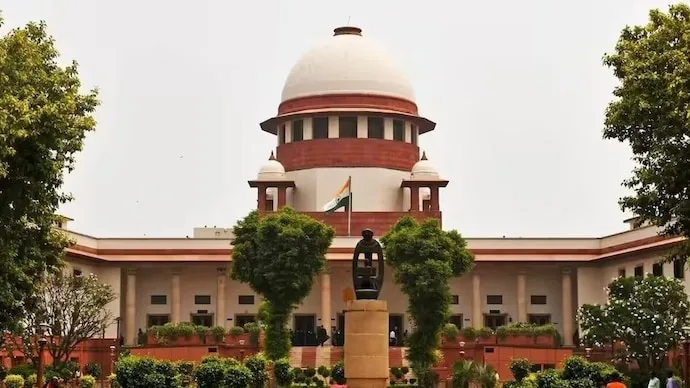
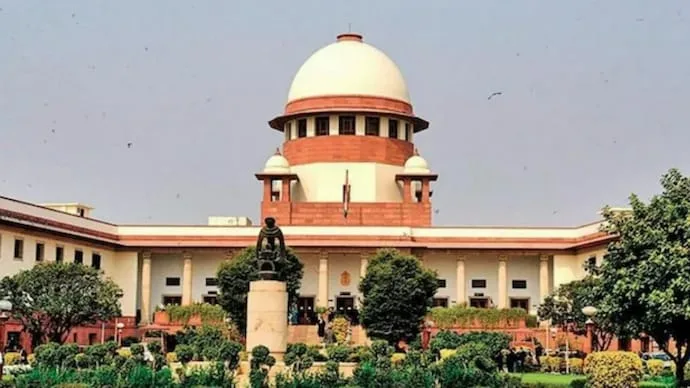
The Punjab compensatory afforestation issue came before the Supreme Court on Thursday as the court directed the state government to submit a proposal identifying adequate land for afforestation linked to road construction projects by the National Highways Authority of India (NHAI).
A bench headed by Chief Justice Surya Kant and comprising Justices Joymalya Bagchi and V Mohana expressed concern over the decline in Punjab’s forest cover and the implementation of compensatory afforestation measures.
Solicitor General Tushar Mehta, appearing for the NHAI, told the court that the Punjab and Haryana High Court had issued continuing directions restricting tree felling in the state, affecting the construction of public roads.

Mehta submitted that compensatory afforestation is a statutory requirement when trees are felled for projects. He also pointed out that Punjab is a border state and that some road projects have strategic importance.
Court Questions Five-Kilometre Afforestation Radius
The Supreme Court specifically asked whether land for compensatory afforestation was being allocated within five kilometres of the locations where trees were being felled.
Mehta said land was allocated within the five-kilometre radius in some cases, while this was not possible in others, resulting in plantations being carried out at alternative locations.
He also told the bench that restrictions on tree felling were affecting public infrastructure projects.
The Supreme Court subsequently directed Punjab to submit a proposal providing adequate land for compensatory afforestation in areas where land is required for road construction.
The court also directed the NHAI to serve a copy of its petition on the Punjab government and sought the state’s response.
Punjab Forest Cover Remains a Concern
The matter is linked to earlier proceedings before the Punjab and Haryana High Court concerning tree felling in Punjab.
On December 24, 2025, the High Court had expressed concern over the state’s declining forest cover and stayed tree felling for projects and other activities. The order was subsequently modified from time to time.
The High Court had noted that forest cover accounted for only 3.67% of Punjab’s geographical area, compared with 4.87% in Rajasthan.
The proceedings arose from a public interest litigation challenging the proposed felling of nearly 5,000 trees for the NHAI’s Zirakpur bypass project. The project connects Zirakpur in Punjab with a toll plaza on the Chandigarh-Shimla highway in Haryana.
The Supreme Court’s latest direction seeks to address the competing requirements of infrastructure development and compensatory afforestation while awaiting Punjab’s response on the availability of suitable land.





Conversation
Be kind and stay on topic. Comments are moderated; abuse, spam and personal attacks are removed. Report a problem