Shopping cart
Your cart empty!


Your cart empty!
Terms of use dolor sit amet consectetur, adipisicing elit. Recusandae provident ullam aperiam quo ad non corrupti sit vel quam repellat ipsa quod sed, repellendus adipisci, ducimus ea modi odio assumenda.
Lorem ipsum dolor sit amet consectetur adipisicing elit. Sequi, cum esse possimus officiis amet ea voluptatibus libero! Dolorum assumenda esse, deserunt ipsum ad iusto! Praesentium error nobis tenetur at, quis nostrum facere excepturi architecto totam.
Lorem ipsum dolor sit amet consectetur adipisicing elit. Inventore, soluta alias eaque modi ipsum sint iusto fugiat vero velit rerum.
Sequi, cum esse possimus officiis amet ea voluptatibus libero! Dolorum assumenda esse, deserunt ipsum ad iusto! Praesentium error nobis tenetur at, quis nostrum facere excepturi architecto totam.
Lorem ipsum dolor sit amet consectetur adipisicing elit. Inventore, soluta alias eaque modi ipsum sint iusto fugiat vero velit rerum.
Dolor sit amet consectetur adipisicing elit. Sequi, cum esse possimus officiis amet ea voluptatibus libero! Dolorum assumenda esse, deserunt ipsum ad iusto! Praesentium error nobis tenetur at, quis nostrum facere excepturi architecto totam.
Lorem ipsum dolor sit amet consectetur adipisicing elit. Inventore, soluta alias eaque modi ipsum sint iusto fugiat vero velit rerum.
Sit amet consectetur adipisicing elit. Sequi, cum esse possimus officiis amet ea voluptatibus libero! Dolorum assumenda esse, deserunt ipsum ad iusto! Praesentium error nobis tenetur at, quis nostrum facere excepturi architecto totam.
Lorem ipsum dolor sit amet consectetur adipisicing elit. Inventore, soluta alias eaque modi ipsum sint iusto fugiat vero velit rerum.
Do you agree to our terms? Sign up
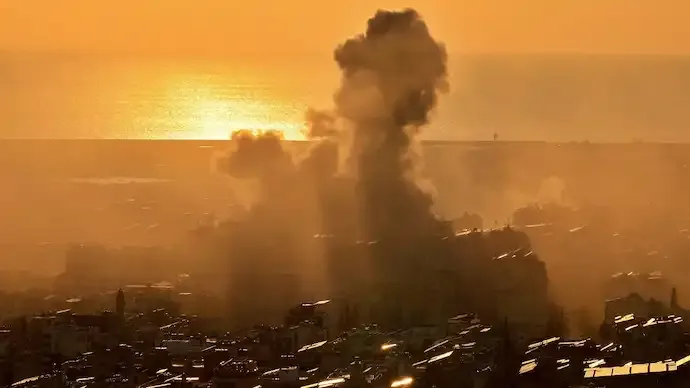
Air quality data has revealed a surprising contrast between Tehran and New Delhi, showing that Iran’s capital has recorded significantly cleaner air even as the region experiences military strikes and ongoing conflict.
According to recent readings, Tehran’s Air Quality Index (AQI) has remained in the “good to moderate” range, typically between 50 and 70. In comparison, Delhi’s air quality has frequently been recorded in the “poor to unhealthy” range, often exceeding 150 AQI.
The contrast has drawn attention to the factors that influence air pollution levels, including geography, urban density, industrial activity and weather conditions.
Despite the ongoing conflict involving Iran, the capital city Tehran has managed to maintain relatively better air quality than Delhi.
Military strikes and fires at energy infrastructure in the region might be expected to worsen air conditions. However, data indicates that these incidents have not pushed Tehran’s pollution levels anywhere close to those typically recorded in the Indian capital.
The comparison highlights how long-term environmental factors often have a stronger influence on air quality than short-term events.
Delhi has struggled with severe air pollution for years due to several contributing factors. These include emissions from vehicles, construction dust, industrial activity and seasonal crop burning in nearby regions.
Weather conditions also play a major role. During certain months, wind patterns and temperature inversions trap pollutants near the ground, causing pollution levels to rise sharply.
As a result, the city frequently records some of the highest AQI readings among major global capitals.
The geographical settings of Tehran and Delhi contribute significantly to their air quality differences.
Tehran’s location and wind patterns often allow pollutants to disperse more easily compared to Delhi’s densely populated urban environment. Meanwhile, Delhi’s landlocked geography combined with high urban activity leads to frequent pollution accumulation.
Environmental experts say that urban planning, industrial regulation and transportation systems also influence pollution levels.
Air pollution remains one of the most serious environmental and public health challenges facing large cities worldwide. High pollution levels can increase the risk of respiratory diseases, cardiovascular problems and other health issues.
Cities like Delhi have been implementing various measures such as emission control policies, traffic restrictions and green initiatives to improve air quality.
However, experts say sustained long-term action is necessary to bring pollution levels down significantly.
The comparison between Tehran and Delhi shows how air quality depends on a complex mix of natural and human factors.
While war and industrial accidents can temporarily affect air conditions, long-term pollution patterns are often shaped by urban development, environmental policies and geographic conditions.
The latest AQI readings highlight the need for stronger pollution control strategies in heavily affected cities to ensure cleaner air for future generations.
50
Published: Mar 12, 2026

All India Story is your trusted source for comprehensive and up-to-the-minute news coverage across India. Bringing you the latest on politics, business, technology, entertainment, sports, and more, we are dedicated to keeping you informed with accurate, engaging, and insightful stories from every corner of the nation.