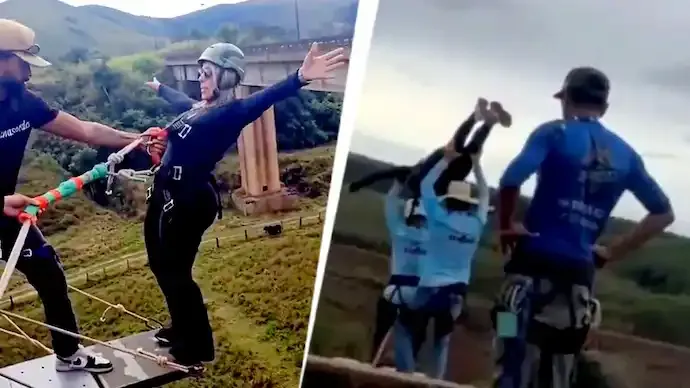
The tragic death of a 21-year-old woman during a rope-jumping activity in Brazil has sparked global concern about the safety standards followed in adventure sports. While initial reports focused on the apparent failure to attach a safety rope before the jump, experts say the incident highlights much deeper risks associated with rope jumping and similar high-risk recreational activities.
The accident, which occurred at a popular bridge-jumping site in São Paulo, has gone viral after videos captured the horrifying moments leading up to the fatal fall. The footage has reignited discussions about safety protocols, operator training, equipment checks and the dangers of extreme sports when even a small mistake occurs.
Viral Video Shows Fatal Safety Failure
Videos circulating on social media show the young woman being held in a "Superman" position by three individuals before she was pushed from the bridge.
Moments later, bystanders can be heard shouting warnings about the rope, realizing that the participant had apparently been launched without the necessary safety attachment.
The incident quickly gained international attention, with many questioning how such a critical oversight could occur during a supervised adventure activity.
Authorities are reportedly investigating the circumstances surrounding the accident and examining whether proper safety procedures were followed.
Rope Jumping Is Inherently High-Risk
Adventure sports experts note that rope jumping is among the most technically demanding recreational activities.
Unlike traditional bungee jumping, rope jumping often involves complex systems that combine climbing ropes, anchors, dynamic load calculations and controlled swinging movements. Every component must be carefully inspected before each jump.
Even when a safety rope is attached correctly, risks remain if equipment is damaged, anchor points are weak, calculations are incorrect or environmental conditions change unexpectedly.
A single error in the setup process can result in catastrophic consequences.
Why Safety Equipment Alone Is Not Enough
Many people assume that the presence of a rope automatically guarantees safety. However, experienced adventure sport professionals argue that safety depends on an entire system rather than a single piece of equipment.
Factors that must be assessed include:
-
Rope strength and condition
-
Proper attachment points
-
Weight calculations
-
Fall distance measurements
-
Swing trajectory analysis
-
Weather conditions
-
Equipment maintenance
-
Emergency rescue preparedness
If any one of these elements is overlooked, the risk of serious injury or death can increase significantly.
Experts emphasize that successful rope jumping requires both technical expertise and strict operational discipline.
Human Error Remains a Major Risk Factor
Investigations into adventure sport accidents frequently identify human error as a primary contributing factor.
Mistakes may occur during equipment preparation, communication between team members, safety checks or final launch procedures.
Many professional operators use multiple verification systems and checklists to ensure that critical steps are never missed.
The Brazil tragedy has highlighted how even a momentary lapse in attention can have irreversible consequences when participants are relying entirely on trained operators for their safety.
Growing Popularity of Adventure Tourism
Extreme sports and adventure tourism have witnessed rapid growth around the world over the past decade.
Activities such as bungee jumping, rope jumping, ziplining, skydiving and cliff diving attract thrill-seekers looking for unique experiences. While most operators maintain strong safety records, experts warn that increasing popularity can sometimes lead to inconsistent safety standards.
Industry specialists argue that stronger regulation, regular inspections and certified training programs are essential to reducing risks.
Safety Lessons from the Brazil Incident
The tragedy serves as a reminder that adventure sports require far more preparation than many participants realize.
Experts recommend that individuals considering high-risk activities should:
-
Choose certified operators with proven safety records
-
Ask about equipment inspection procedures
-
Verify staff qualifications and training
-
Understand emergency response plans
-
Avoid operators that prioritize speed over safety
Participants should also receive clear safety briefings and understand exactly how equipment works before taking part.
Investigation Continues
Authorities in Brazil are expected to continue examining the incident to determine whether negligence, procedural failures or safety violations contributed to the fatal accident.
The findings could influence future safety regulations and operating standards for adventure sports providers in the country.
As the investigation progresses, the case has become a global example of why rigorous safety measures remain critical in high-risk recreational activities.
The death of a young woman during a rope-jumping activity in Brazil has drawn attention to the hidden dangers of extreme adventure sports. While the apparent failure to attach a safety rope has become the focus of public discussion, experts say the incident underscores broader concerns about training, supervision, equipment checks and operational discipline.
The tragedy serves as a powerful reminder that in activities involving significant risk, safety depends not on one piece of equipment but on a carefully managed system where every detail matters.
Prev Article
Are Water Bars the Next Big Luxury Wedding Trend in India?
Next Article
Zayn Malik Wears Rohit Gandhi + Rahul Khanna Jacket at Mexico Concert, Spotlighting Indian Fashion Globally