

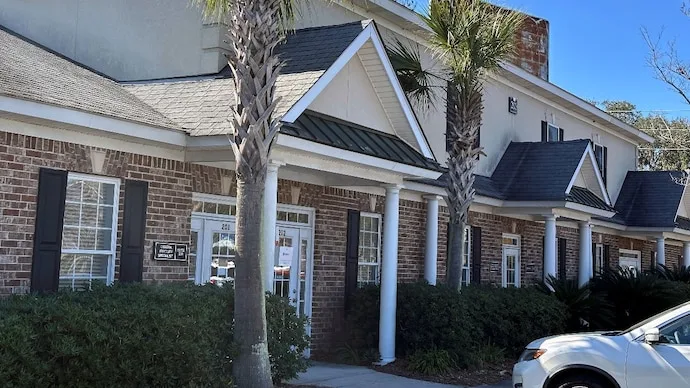

Indian immigrants in Forsyth County, Georgia, are transforming the suburban landscape with cultural institutions, businesses, temples and affluent residential communities. Their population has grown from just 160 in 2000 to approximately 52,000 today, making Indians around 16% of the county's population.
White residents account for approximately 63.5% of the population, while Indians have become the county's second-largest ethnic group.
The growing community has established Indian supermarkets, restaurants, clothing stores and religious institutions. However, community leaders say increasing visibility and limited interaction with other residents have also created challenges around integration and perceptions of immigration.

Million-Dollar Homes and Indian Businesses Reshape Neighbourhoods
Forsyth County has become a preferred destination for Indian families moving to Georgia, partly because of its established support network, schools, temples and Indian-owned businesses.
Some residential communities now have a substantial Indian presence. In one newly developed neighbourhood in Cumming, the county's main town, 45 of 56 five-bedroom houses reportedly belong to Indian families. Each property is valued at approximately $1.5 million.
Indian businesses have also become increasingly visible. Suvidha supermarket attracts shoppers looking for familiar products such as dosa and idli batter, dahi, atta and traditional sweets. Nearby establishments include restaurants, clothing stores, flower shops and jewellery retailers.
The greater Atlanta area also has around 100 Hindu temples, including the prominent BAPS Swaminarayan temple. Indian festivals such as Diwali and Ganesh Chaturthi are celebrated through large community gatherings.
Forsyth County's History of Racial Violence
Behind its growing affluence, Forsyth County has a difficult history of racial discrimination and violence.
The region was once home to Cherokee communities, who were forced from their ancestral lands following the discovery of gold in 1828. Their displacement formed part of the wider history of the Trail of Tears.
The county also witnessed severe anti-Black violence. In 1912, following the rape and murder of Mae Crow, an 18-year-old White woman, Black residents faced violent retaliation. Rob Edwards was lynched by a mob, while two other Black men were subsequently hanged after trials described in historical accounts as one-sided.
White supremacists forced Black residents out of the area, leaving Forsyth overwhelmingly White for decades.
In January 1987, civil rights activists attempting to organise a peace march in the county were met with hostility and violence from White residents. The incident remains an important chapter in the county's history.
Integration Remains an Important Challenge
Community leaders say many first-generation Indian immigrants initially build social networks around people who share their language, culture and traditions. However, they believe stronger interaction with local residents is important for long-term integration.
Long-time Georgia resident Venu Challa has emphasised the importance of understanding Forsyth's racial history, arguing that awareness of the past can help newcomers adapt and contribute positively to the community.
Second-generation Indian Americans are increasingly participating in local public life. Shuchita Patel, for example, contested a recent Forsyth County commissioner election on a Democratic Party ticket, although she narrowly lost.
Her campaign and the participation of other Indian Americans in the November 3 midterm elections reflect the community's growing engagement in American civic life.
A Changing Community With a Complex History
Forsyth County has evolved from an overwhelmingly White community with a history of racial violence into an increasingly diverse destination for affluent Indian families.
Its transformation is visible in residential neighbourhoods, supermarkets, temples and public participation. Community leaders believe the next stage of this change will depend not only on economic success but also on deeper social connections and awareness of local history.
Read more: All India Story





Conversation
Be kind and stay on topic. Comments are moderated; abuse, spam and personal attacks are removed. Report a problem