
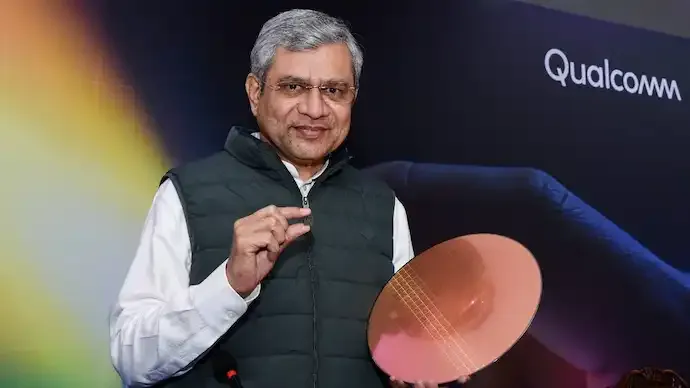
India is steadily strengthening its position in the global semiconductor ecosystem, with Indian engineering teams now contributing to the design of advanced 2-nanometre silicon chips. The development highlights the country’s growing technical capabilities and reflects a broader push toward building a competitive high-end chip industry.
During a recent technology showcase at a Bengaluru facility, it was revealed that Indian engineers are actively involved in designing next-generation processors based on the 2nm node, one of the most advanced semiconductor technologies currently under development worldwide. Although the manufacturing of these chips will take place outside India, the design and development work being executed domestically signals a major milestone for the country’s semiconductor ambitions.
Government officials emphasised that India’s role in advanced chip design is expanding rapidly. From early-stage product definition to final silicon validation, several stages of the chip development lifecycle are now being handled by Indian teams. This reflects the maturation of India’s design ecosystem, which has evolved from supporting global projects to taking leadership roles in complex engineering initiatives.
The government has outlined a structured roadmap to gradually move toward advanced semiconductor manufacturing. While initial fabrication units in India are expected to begin with mature nodes such as 28nm—commonly used in automotive electronics, industrial equipment, and consumer devices—the long-term strategy includes transitioning toward smaller nodes like 7nm. Policymakers believe that learning from established semiconductor leaders such as Japan, South Korea, and Taiwan will help accelerate this transition.
Industry leaders noted that innovation emerging from India is already influencing global advancements in connectivity, intelligent computing, and next-generation digital infrastructure. Indian engineers are increasingly working on sophisticated tasks that require deep technical expertise, demonstrating how the country is becoming an important contributor to global semiconductor innovation rather than just a support hub.
Another important aspect of this growth is talent development. Under national semiconductor initiatives, tens of thousands of engineers have undergone specialised training programs designed to enhance expertise in chip design, manufacturing processes, and emerging technologies. Expanding the skilled workforce is expected to play a crucial role in supporting India’s ambitions to establish itself as a major player in the semiconductor supply chain.
Experts believe that while achieving full-scale advanced chip manufacturing domestically may take time, India’s strong design capabilities already position it among nations shaping the future of silicon technology. As infrastructure investments continue and industry partnerships expand, the country’s semiconductor journey is likely to move from design excellence toward end-to-end chip development in the coming years.
The increasing involvement of Indian engineers in cutting-edge semiconductor projects reflects both industry confidence and a national strategy aimed at reducing dependency on global supply chains while fostering innovation-driven growth.




Conversation
Be kind and stay on topic. Comments are moderated; abuse, spam and personal attacks are removed. Report a problem