

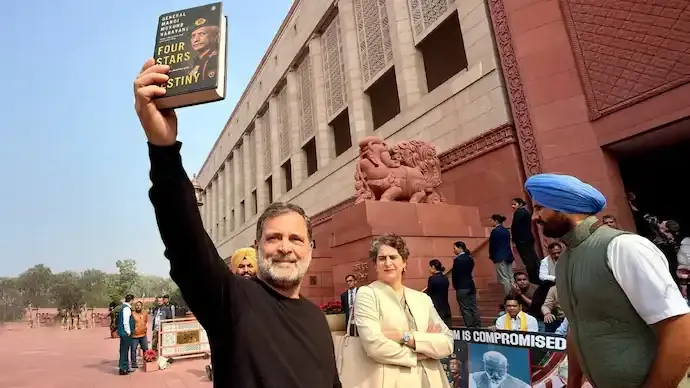

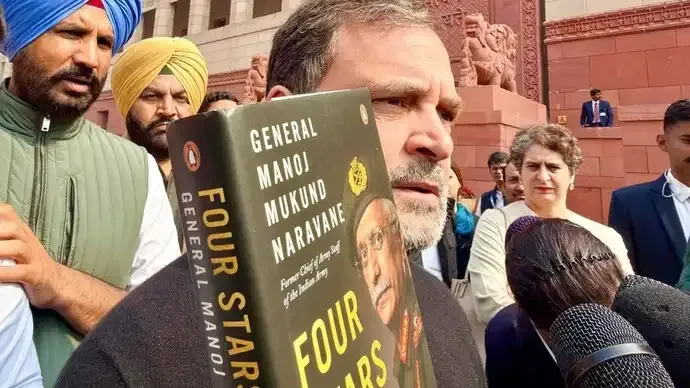
A major political and publishing controversy has emerged after a hardbound copy of an unpublished memoir by former Army chief General MM Naravane surfaced inside Parliament. The appearance of the book, titled Four Stars of Destiny, has triggered debate over how a manuscript still awaiting official clearance reached circulation and eventually landed in the hands of senior political leaders.
The memoir, which chronicles decades of military service and leadership experiences, was initially scheduled for release in 2024. Pre-orders were opened online and the book was expected to generate strong public interest due to its insights into India’s defence landscape, including key developments along the Line of Actual Control and discussions around military reforms. However, the publication process was halted, and the book remained officially unpublished for nearly two years.
The controversy intensified when a printed hardcover copy was displayed within the Parliament complex, raising questions about whether the manuscript had been printed before receiving clearance from the Ministry of Defence. Defence officials had earlier suggested that the book had not been formally published, prompting widespread speculation about the circumstances under which physical copies were produced.

Industry observers note that memoirs by senior military leaders often undergo detailed vetting, especially when operational matters or sensitive information are involved. While retired officers are generally free to publish after leaving service, they remain bound by laws such as the Official Secrets Act, which restrict disclosure of classified material. As a precaution, many authors voluntarily submit manuscripts for review to avoid legal or security complications.
Reports indicate that the manuscript of Four Stars of Destiny had been under review for an extended period, making it unusual for bound copies to appear publicly. Sources familiar with the publishing process suggest that converting a manuscript into a physical book involves significant investment, including printing, formatting, and distribution logistics. This has led to questions about whether the publisher moved ahead with production prematurely or whether copies were circulated internally for review purposes.
Further intrigue surrounds claims that limited copies had reached certain bookstores before being recalled following controversy. Individuals familiar with the matter suggested that pre-launch printing may have taken place ahead of final approvals, though no official confirmation has been provided. The presence of a hardcover copy in Parliament has therefore intensified calls for clarity from both government authorities and the publishing house involved.
The situation has also sparked political debate, as excerpts reportedly linked to the memoir were referenced during parliamentary discussions. The incident has reignited conversations about transparency, national security considerations, and the balance between freedom of expression and safeguarding sensitive defence information.
As questions continue to mount, observers say the issue highlights broader challenges in managing defence-related publications in the digital age. With manuscripts circulating widely and public interest growing, authorities may face increasing pressure to clarify the review process and explain how an unpublished book became part of a national political discussion.




Conversation
Be kind and stay on topic. Comments are moderated; abuse, spam and personal attacks are removed. Report a problem