

The University Grants Commission has found itself at the centre of an intense national debate after notifying a new set of regulations aimed at tackling discrimination in higher education institutions. The updated framework, officially titled the Equity in Higher Education Institutions Regulations, 2026, significantly revises earlier norms and introduces legally enforceable obligations for universities and colleges across India.
The guidelines replace the largely advisory structure that existed since 2012 with a mandatory compliance regime. While the UGC has described the move as essential to promoting fairness, inclusion and student welfare, critics argue that the regulations are vague, expansive and vulnerable to misuse.
What the New UGC Guidelines Provide
One of the most notable changes is the expanded definition of discrimination. The 2026 regulations define discrimination broadly, covering both direct and indirect forms of unfair treatment based on caste, tribe, religion, gender, disability, race or place of birth. Importantly, the rules now explicitly include Other Backward Classes (OBCs) alongside Scheduled Castes (SCs) and Scheduled Tribes (STs), a shift that has triggered political and academic debate.
The regulations make it mandatory for every higher education institution to establish an Equal Opportunity Centre (EOC). These centres are tasked with receiving complaints, monitoring discrimination-related issues and promoting inclusive practices on campus. Under each EOC, institutions must also constitute Equity Committees, with compulsory representation from SC, ST, OBC communities, women and persons with disabilities.
Universities are required to set up structured systems for complaint registration, redressal and documentation. Regular internal monitoring and reporting to the UGC are also mandated. Crucially, responsibility for implementation has been placed squarely on institutional leadership, including vice-chancellors and principals.
Penalties and Enforcement
Unlike earlier frameworks, the 2026 guidelines are legally enforceable. Institutions that fail to comply risk serious consequences, including denial of approval for academic programmes, exclusion from UGC schemes, withdrawal of grants and, in extreme cases, loss of recognition. This shift from advisory norms to binding regulation marks one of the most significant changes in higher education governance in recent years.
Why the Guidelines Were Introduced
The UGC has cited a sharp rise in complaints related to discrimination on campuses and repeated judicial directions urging stronger institutional safeguards. According to the regulator, the new rules are intended to create uniform mechanisms for addressing grievances and ensuring equal opportunity across institutions.
Why the Guidelines Are Controversial
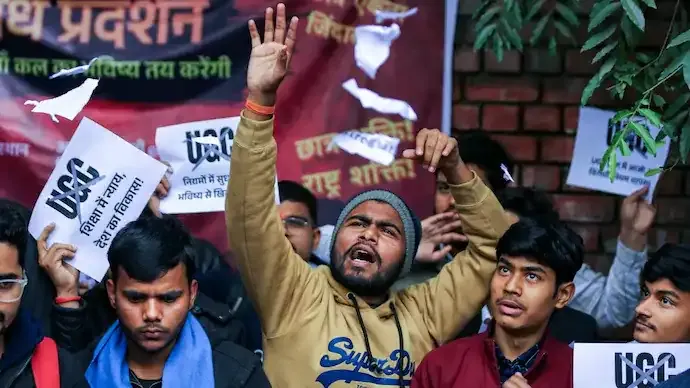
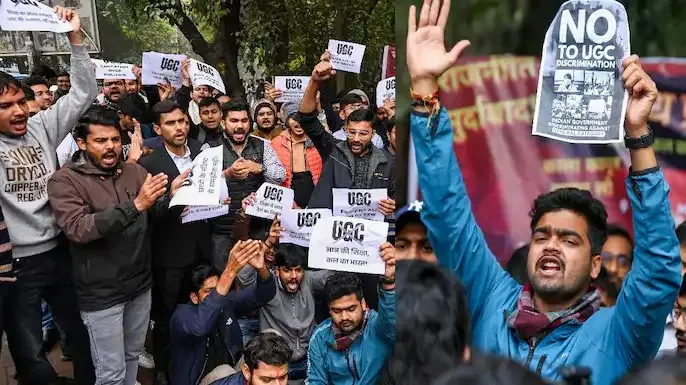
Opposition to the regulations has emerged from student groups, faculty bodies and political leaders in several states. Critics argue that the broad definition of discrimination lacks clear safeguards for those accused, potentially creating a presumption of guilt. Concerns have also been raised about administrative overreach, inconsistent implementation and the ability of universities to manage the added compliance burden.
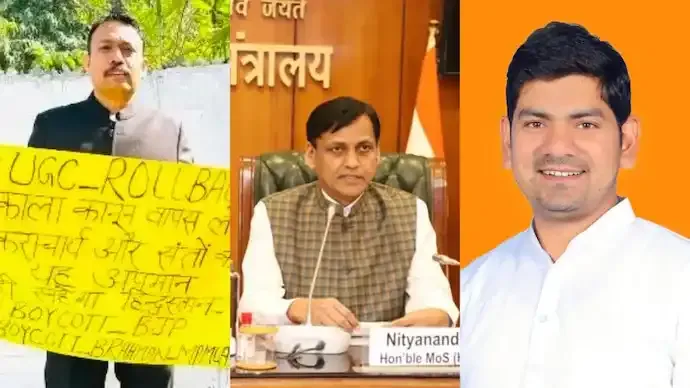
The controversy has deepened after resignations and public dissent from within administrative and political circles, suggesting that resistance extends beyond campus politics. Protesters claim the rules could intensify social divisions rather than resolve them.
Supporters, however, argue that decades of unresolved discrimination complaints necessitated stronger enforcement. They maintain that without legal backing and penalties, institutional accountability would remain weak.
What Lies Ahead
All UGC-recognised institutions are required to implement the 2026 regulations immediately. How the guidelines function in practice will depend on interpretation, institutional capacity and oversight. As protests continue and pressure mounts for clarity or revision, the new UGC framework has become more than a regulatory update—it is now a defining test of how equity, governance and due process are balanced in India’s higher education system.



Conversation
Be kind and stay on topic. Comments are moderated; abuse, spam and personal attacks are removed. Report a problem