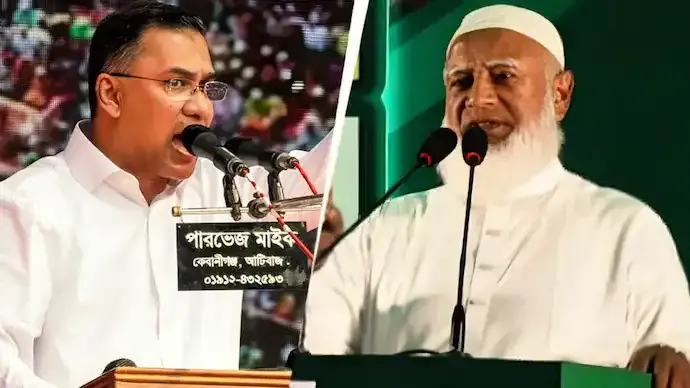
Just days ahead of Bangladesh’s parliamentary elections scheduled for February 12, a sharp ideological confrontation has emerged within the country’s Islamist landscape. Hefazat-e-Islam Bangladesh has openly challenged the Bangladesh Jamaat-e-Islami, declaring that voting for the party is religiously forbidden and framing the election as a struggle against its rival’s ideology.
The remarks were delivered by Hefazat’s leadership while announcing support for a candidate aligned with the Bangladesh Nationalist Party (BNP). The organisation described its stance not merely as political opposition but as a broader ideological battle, highlighting doctrinal differences that have intensified tensions between the two Islamist groups in the lead-up to the vote.
Hefazat-e-Islam accused Jamaat-e-Islami of misrepresenting religious teachings and urged supporters to unite against what it called a “false force.” The statement has drawn significant attention across Bangladesh’s political spectrum, as it signals a widening split among Islamist factions at a time when election dynamics are already complex. Surveys suggest Jamaat-e-Islami remains a strong contender, while the BNP is widely viewed as a leading challenger in the race for power.
Political observers note that the rivalry between Hefazat and Jamaat has been building for months. Previously, the two groups operated within overlapping political spaces without open confrontation. However, recent ideological disputes and electoral calculations appear to have transformed the relationship into an outright public feud. Analysts believe this divide could influence voter mobilisation in several key constituencies.
The February election is also expected to include a referendum linked to broader political reforms, adding another layer of significance to an already charged environment. As rival factions seek to define their vision of governance and religious identity, debates around ideology, state policy, and national direction have intensified.
Hefazat-e-Islam, known for its strong grassroots influence through religious institutions, has long advocated for stricter interpretations of social and legal norms. The group has previously organised large-scale demonstrations on issues ranging from education policies to international relations. Its recent statements highlight not only theological disagreements but also a struggle for influence within Bangladesh’s evolving political landscape.
The ideological clash comes amid heightened scrutiny of minority rights and regional relations, with observers closely watching how election rhetoric could shape future policies. Experts warn that escalating tensions between rival groups risk deepening polarisation within society, especially as campaign messaging becomes more confrontational.
With campaigning entering its final phase, the confrontation between Hefazat-e-Islam and Jamaat-e-Islami reflects broader ideological fault lines within Bangladesh’s political and religious discourse. As voters prepare to head to the polls, the outcome of this rivalry could play a significant role in determining the direction of the country’s political narrative and the balance of power among competing factions.
Prev Article
Bangladesh Elections 2026: BNP and Jamaat Manifestos Outline Stance on India Relations and Hindu Minority Protection
Next Article
US ICE ‘Worst of the Worst’ List Includes 89 Indians, Majority Convicted in Financial Fraud Cases