

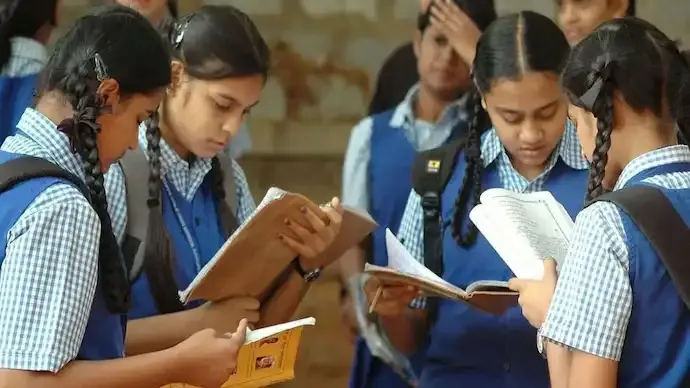

The year 2025 marked a decisive turning point for the Central Board of Secondary Education (CBSE), as the board introduced some of its most transformative academic and examination reforms to date. What had long been a traditional system built on memorisation, rigid structures and one-time board exams has now shifted toward a more flexible, technology-driven and competency-focused framework, reshaping how students in India prepare, learn and perform.
A major development was the introduction of redesigned syllabi for Classes 10 and 12 for the 2025–26 academic session. The new curriculum moves away from content-heavy chapters and instead prioritises application-based understanding, hands-on activities, interdisciplinary learning and real-world relevance. This restructuring aims to ensure that learners develop analytical and practical skills instead of relying solely on rote learning.
One of the most welcomed changes came with increased flexibility in subject selection. Students who opted for Basic Mathematics in Class 10 can now take Mathematics Standard in Class 11, reversing years of restrictions that previously limited academic transitions. This reform recognises evolving student interests and supports more personalised learning pathways.

Examination patterns also underwent a major transition. CBSE strengthened its commitment to competency-based evaluation by expanding the weightage of MCQs, case-based analytics, source-based assessments and situation-driven questions. These formats encourage students to interpret information, apply concepts and show genuine understanding instead of memorising textbook lines.
Another significant step was raising the internal assessment component to 40 percent. This encourages continuous classroom engagement and reduces the pressure of a single high-stakes exam. Schools now play a stronger role in evaluating practical skills, project work and periodic assessments.
The board also expanded its list of skill-based subjects, aligning school education with emerging career domains such as design, electronics, transportation and fitness. These additions reflect the increasing importance of vocational training in shaping future-ready learners.
One of the most widely discussed decisions was the confirmation that CBSE will conduct Class 10 board exams twice a year from 2026. The first attempt will be compulsory for all students, while the second attempt will remain optional for improvement. This reform is aimed at reducing exam-related stress and offering students more opportunities to enhance performance.
Administrative procedures have also become more robust and digital. APAAR ID integration was made mandatory for board exam registration, ensuring streamlined academic records. CBSE also introduced stricter verification protocols, requiring schools and parents to approve all student data with precision to avoid errors during admissions and documentation.
In 2025, CBSE accelerated its transition to digital evaluation. Pilot projects demonstrated quicker, more accurate marking, and the board is set to expand digital evaluation across subjects once all test phases are complete.
For Class 10 students, one of the most impactful announcements was the introduction of section-wise answer writing rules for Science and Social Science beginning 2026. Each subject will have clearly demarcated sections, and answers written outside the assigned space will not be evaluated. Schools have been directed to train students accordingly during internal assessments.
Collectively, these reforms represent a comprehensive shift toward modern, flexible and learner-focused education. With technology-driven evaluation, skill-oriented subjects and reduced dependence on memorisation, CBSE has laid the groundwork for a more progressive academic environment that prepares students for real-world challenges.





Conversation
Be kind and stay on topic. Comments are moderated; abuse, spam and personal attacks are removed. Report a problem