

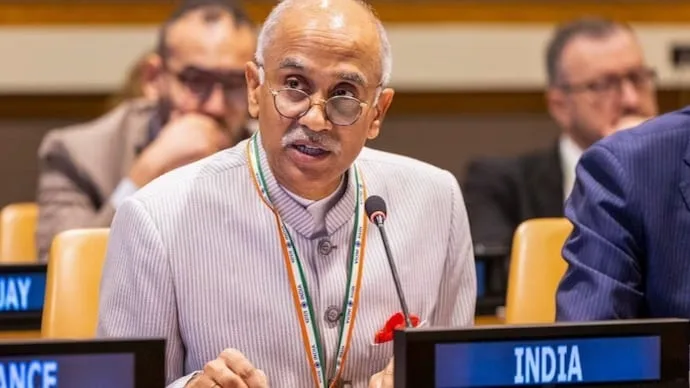

India has urged comprehensive reforms of the United Nations Security Council (UNSC), warning that the veto power must not become a tool of narrow political interests. New Delhi has also opposed proposals to create permanent members without veto rights, arguing that such an arrangement would establish a “second-class” category within the Council.
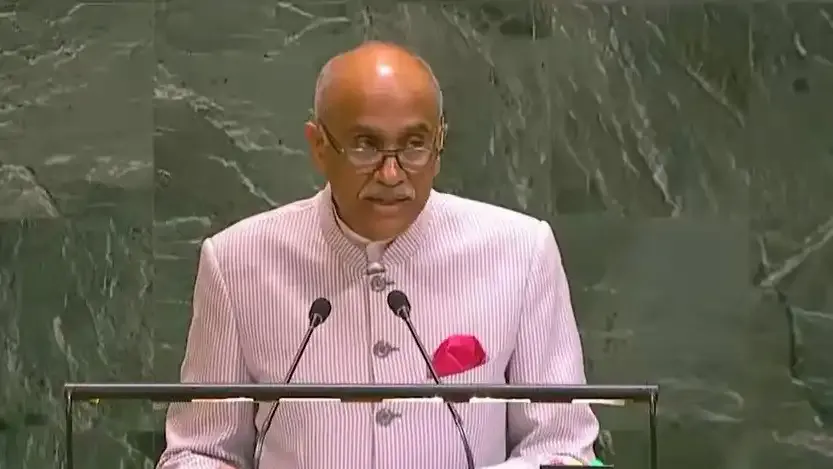
Addressing an Inter-Governmental Negotiations (IGN) plenary debate at the UN General Assembly, India's Permanent Representative, Ambassador Harish Parvathaneni, said limiting the veto alone would not address the structural imbalance in the Council's decision-making process.
He maintained that all permanent members of a reformed Security Council should enjoy equal rights and responsibilities, including veto powers for as long as the provision continues to exist.

India Questions Effectiveness of Veto Reforms
Parvathaneni highlighted the historical use of the veto, noting that it had been exercised 331 times on approximately 200 resolutions. He said most vetoes, or threats to use them, had come from three of the five permanent members: China, France, Russia, the United Kingdom and the United States.
He also referred to the 2022 UN initiative requiring a General Assembly debate whenever a permanent member exercises its veto. Adopted through Resolution 76/262, the measure was intended to strengthen accountability.
However, India argued that the record since its introduction showed the limitations of incremental measures. Parvathaneni called for negotiations addressing membership categories, regional representation, the Council's size and working methods alongside the veto issue.
New Permanent Members Must Have Equal Rights
India reiterated that expanding permanent membership without extending veto powers would reinforce existing inequalities rather than correct them.
Parvathaneni argued that adding another category of long-term members without veto rights would leave the decision-making authority of the existing five permanent members largely unchanged.
India's position also aligns with the common African position on veto reform, according to the envoy's remarks. New Delhi has consistently supported expanding both permanent and non-permanent membership to make the Council more representative of contemporary geopolitical realities.
India Flags De Facto Vetoes and Stalled Negotiations
The Indian envoy said veto-like powers also operate through procedures requiring consensus, including decisions on sanctions committees and certain Council statements. He argued that individual members can block proposals without providing explanations.
He further criticised the slow progress of the IGN process, saying that negotiations had produced no concrete outcome despite multiple rounds. India called for time-bound, text-based negotiations guided by the principle of the widest possible political acceptance.
Parvathaneni also cited the 1965 expansion of the Council, when non-permanent membership increased from six to 10 while the five permanent members retained their positions and veto powers.
India Renews Push for Security Council Reform
Established in 1945, the 15-member Security Council comprises five permanent members and 10 elected members serving two-year terms. India argues that its composition no longer adequately reflects the current global balance of power.
New Delhi is also seeking a non-permanent seat for the 2028–29 term, with elections scheduled for June 2027. India and Tajikistan are expected to contest the Asia-Pacific Group's seat, according to the supplied report.
India maintains that meaningful reform must address the Council's overall structure rather than focus exclusively on veto restrictions or additional elected seats.
Relevant link: United Nations Security Council official website





Conversation
Be kind and stay on topic. Comments are moderated; abuse, spam and personal attacks are removed. Report a problem