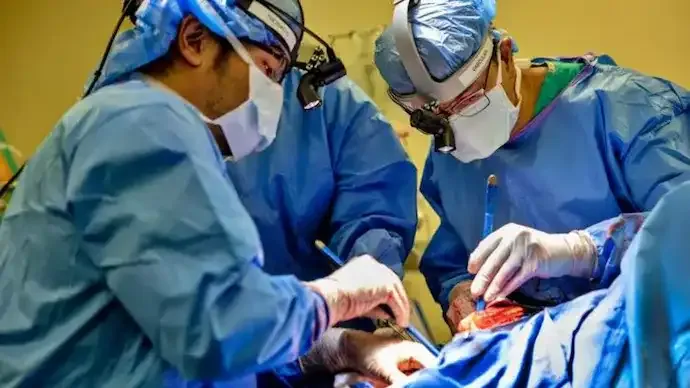
In a landmark medical breakthrough, doctors in the United States have successfully kept a critically ill patient alive for 48 hours without functioning lungs, using an advanced artificial lung system to bridge the gap to a life-saving double lung transplant. The unprecedented procedure marks a major step forward in the treatment of severe respiratory failure and could reshape how acute lung conditions are managed worldwide.
The case involved a 33-year-old man who arrived at hospital in critical condition after developing acute respiratory distress syndrome (ARDS). The condition was initially triggered by influenza and rapidly worsened by a severe bacterial pneumonia. His health deteriorated dramatically within hours, with multiple organs failing in quick succession. Doctors reported that his heart stopped shortly after arrival, requiring immediate cardiopulmonary resuscitation to stabilise him.
Medical imaging and surgical assessment revealed catastrophic lung damage. The lungs were extensively inflamed, infected, and structurally destroyed, leaving no possibility of recovery. At the same time, the level of inflammation made an immediate lung transplant impossible, as the body was not in a condition to accept donor organs safely.
Traditionally, ARDS patients are treated with ventilators and supportive care in the hope that lung function will gradually return. However, in this case, doctors determined that the damage was irreversible. Detailed molecular analysis of the removed lungs later confirmed widespread scarring and immune-mediated injury, offering biological proof that recovery was not possible without transplantation.
Faced with a scenario where the patient could not survive with his own lungs and could not yet receive donor lungs, surgeons took a radical step. Both diseased lungs were surgically removed, and the patient was connected to a custom-built artificial lung system. This device performed the essential functions of the lungs by oxygenating the blood, removing carbon dioxide, and maintaining stable circulation, effectively bypassing the respiratory system altogether.
Once the infected lungs were removed, the patient’s condition began to stabilise. Blood pressure improved, oxygen delivery normalised, and other failing organs—including the kidneys and heart—started to recover. Over the next 48 hours, the artificial lung system kept him alive while doctors managed infection and inflammation.
Two days later, suitable donor lungs became available. Surgeons successfully performed a double lung transplant, reconnecting the patient to natural respiratory function. More than two years after the procedure, the patient is reported to be living with strong lung function and a good quality of life.
This case challenges long-held assumptions in critical care medicine. Lung transplants have traditionally been reserved for chronic conditions such as cystic fibrosis or long-standing interstitial lung disease. The success of this intervention suggests that transplantation may also be a viable option for select patients with acute, catastrophic lung failure.
Experts believe this approach could be especially valuable during outbreaks of severe respiratory infections, when young and otherwise healthy patients can deteriorate rapidly. While the technology is currently limited to highly specialised centres, there is growing optimism that standardised artificial lung devices could one day become more widely available in intensive care units.
The breakthrough offers new hope for patients with severe ARDS who would otherwise face near-certain death, opening the door to a future where artificial organs can temporarily replace failing systems until definitive treatment becomes possible.
Prev Article
Why Moltbook AI Doom Posts Are Largely Human-Driven, Not Autonomous
Next Article
Indian Scientists Explain How Subtle Solar Eruptions Turn Into Violent Solar Storms