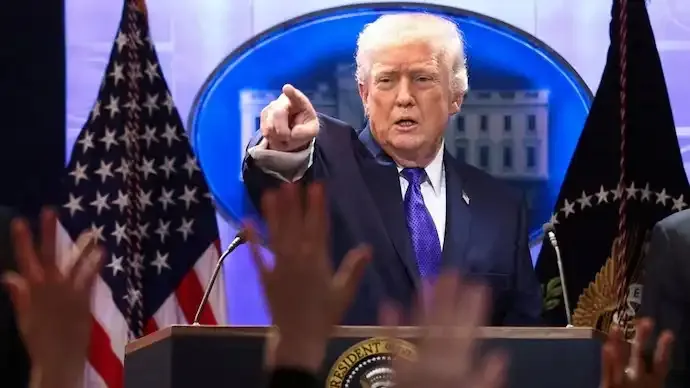
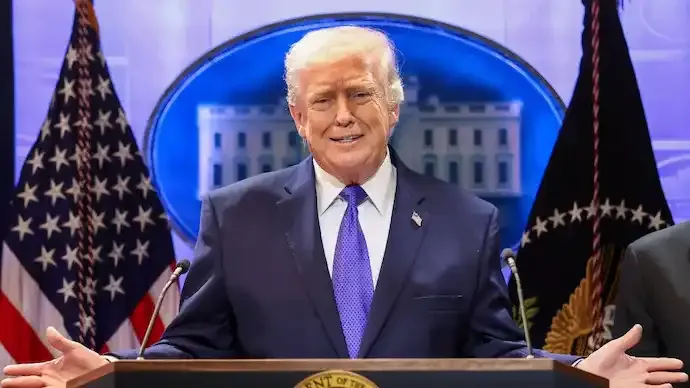
US President Donald Trump has signed an executive order imposing a 10% tariff on imports from all countries, escalating his trade agenda just hours after the Supreme Court struck down his earlier tariff framework. The new duties are set to take effect on February 24 and will apply globally.
Announcing the decision, Trump said the tariff would be implemented immediately under Section 122 of the Trade Act of 1974. This provision allows the president to impose temporary tariffs of up to 15% for a period of 150 days without prior congressional approval.
The move follows a 6–3 Supreme Court ruling that invalidated the administration’s use of the International Emergency Economic Powers Act (IEEPA) to impose sweeping import duties. The court held that the law does not grant authority for broad tariffs in peacetime, reinforcing Congress’s constitutional role in taxation and trade policy.
Temporary measure with broader strategy
The new 10% tariff will remain in place for approximately five months while the administration conducts trade investigations and evaluates long-term tariff frameworks. Trump indicated that the temporary measure could be replaced or supplemented with additional duties based on findings from ongoing reviews.
He suggested that further actions may be pursued under Section 301 (unfair trade practices) and Section 232 (national security considerations), which could lead to targeted or higher tariffs on specific countries or sectors.
Trade officials confirmed that investigations into unfair trade practices will be launched to protect domestic industries and address trade imbalances.
Exemptions and trade commitments
A White House fact sheet outlined exemptions for certain categories to protect strategic economic needs. These include select products in energy, pharmaceuticals, aerospace, autos, critical minerals, bullion, and currency metals.
Officials also stated that the United States will continue to honour legally binding reciprocal trade agreements and expects similar compliance from trading partners.
In a separate order, duty-free treatment for low-value international shipments has been suspended, making them subject to the temporary tariff.
Revenue and legal implications
The court’s ruling has created uncertainty over approximately $175 billion in tariff revenue collected under the previous emergency authority. Officials indicated that any potential refunds may be subject to prolonged litigation.
Treasury officials suggested that the new tariff framework and future trade actions could offset revenue losses, with projections indicating overall tariff revenue may remain largely stable.
Trade tensions and global impact
The latest move signals the administration’s continued commitment to tariffs as a central economic and strategic tool. Analysts warn that the global tariff could heighten trade tensions, disrupt supply chains, and increase costs for importers and consumers.
While the Supreme Court ruling limited the use of emergency powers for tariffs, the administration’s shift to alternative legal mechanisms demonstrates a determination to maintain trade pressure and protect domestic industries.
With investigations underway and temporary tariffs set to take effect, global markets and trade partners are closely monitoring Washington’s next steps in shaping international trade policy.
Prev Article
Trump Attacks Supreme Court After Global Tariffs Policy Struck Down
Next Article
Trump Says India-US Trade Deal Unchanged After Supreme Court Tariffs Ruling