

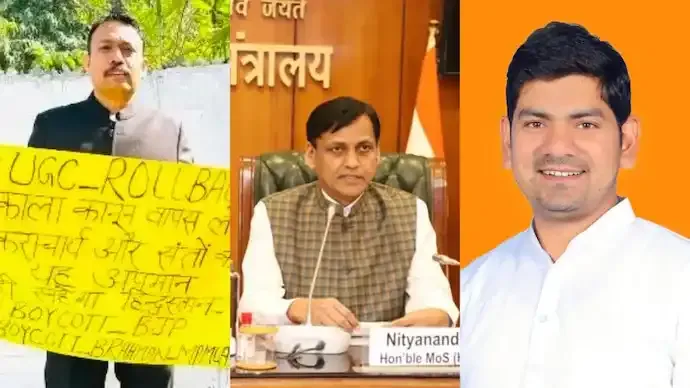

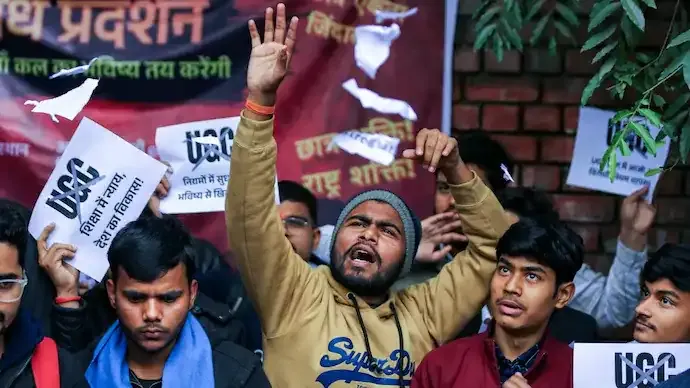
The controversy surrounding the University Grants Commission’s “Equity in Higher Education Institutions Regulations, 2026” has deepened sharply, moving beyond campus protests into the heart of the administration and political establishment. What began as a regulatory attempt to address caste-based discrimination in universities has now triggered resignations, political discomfort and growing calls for a review or rollback of the rules.
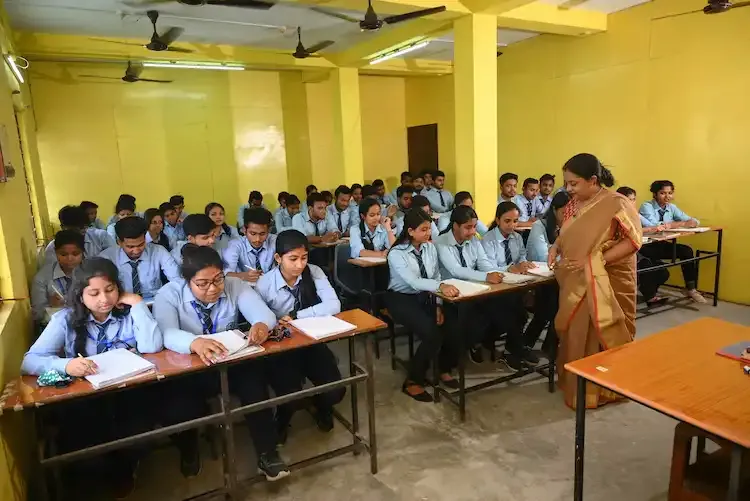
The regulations, notified earlier this month, mandate that all higher education institutions establish Equal Opportunity Centres, Equity Committees, and round-the-clock grievance redressal helplines to handle complaints of discrimination, particularly involving Scheduled Castes, Scheduled Tribes and Other Backward Classes. The UGC has maintained that the framework is designed to strengthen inclusivity and accountability on campuses.
However, critics argue that the regulations are poorly defined, legally vague and structurally one-sided, raising serious concerns about due process and fairness.

Why the Regulations Are Facing Resistance
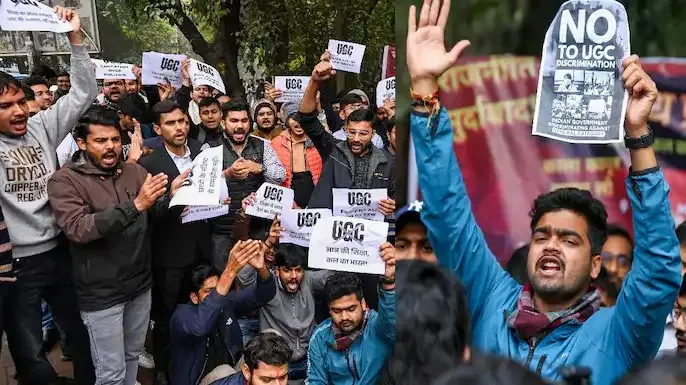
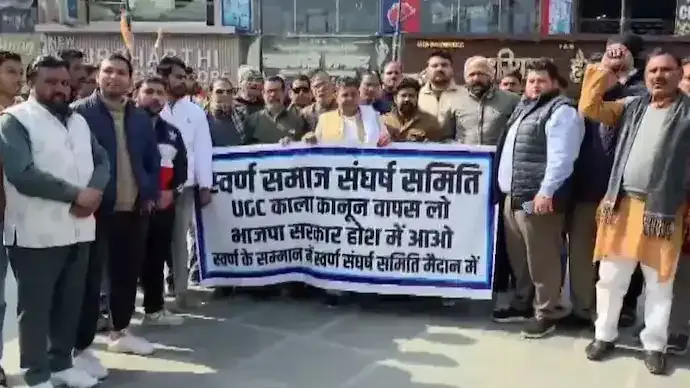
Opposition to the new guidelines has been driven by several core objections raised by faculty members, students and administrators across states. Critics claim the rules fail to clearly outline procedural safeguards for those accused of discrimination, potentially creating a presumption of guilt. There is also concern that the regulations could be misused, leading to harassment of teachers and students without adequate checks.
Institutions that fail to comply face strict consequences, including possible withdrawal of recognition or funding, which critics say puts universities under coercive pressure without offering clarity on implementation standards. Many have warned that the regulations may end up polarising campuses instead of fostering genuine inclusion.
Resignations Add Political Weight to the Row
The controversy took a more serious turn after a senior bureaucrat resigned from government service, citing fundamental disagreement with the policy and dissatisfaction with how dissenting voices were being handled. Soon after, a leader from the BJP’s youth wing also stepped down, stating that the regulations were deepening divisions rather than delivering reform.
The resignations have been seized upon by critics as evidence that opposition to the UGC rules is no longer limited to student bodies or academic circles but has spread to the administrative and political mainstream. Several commentators have described the developments as a warning sign for the government, suggesting that the issue now carries reputational and governance risks.
Government Response Remains Cautious
Amid mounting pressure, the Union Education Ministry has so far avoided committing to a review or suspension of the regulations. When questioned, the Education Minister said the government remained “open to dialogue” and reiterated that the intent behind the rules was to promote equity and fairness, not conflict.
However, the absence of a clear roadmap for consultations or amendments has fuelled frustration among stakeholders. Protesters argue that without clarity or corrective measures, the situation on campuses could worsen, with trust between students, faculty and administrators eroding further.
A Growing Ideological Flashpoint
The UGC regulations row has now emerged as a broader ideological debate, pitting the need to address caste discrimination against concerns over administrative overreach, lack of due process and campus polarisation. With protests continuing in multiple states and resignations drawing national attention, the Centre faces increasing pressure to clarify whether the regulations will remain unchanged or undergo revision.
As the issue escalates, higher education governance finds itself at the centre of a national debate on inclusion, accountability and fairness—one that may shape the future of university regulation in India.





Conversation
Be kind and stay on topic. Comments are moderated; abuse, spam and personal attacks are removed. Report a problem