


The Bharatiya Janata Party-led government at the Centre is facing mounting political and social pressure following the notification of the University Grants Commission’s new caste equity regulations, which aim to address discrimination in higher education institutions but have triggered strong opposition from sections of upper-caste and general category groups.
The newly notified rules expand the scope of caste-based discrimination to include Other Backward Classes (OBCs), in addition to Scheduled Castes (SCs) and Scheduled Tribes (STs). They also introduce enforceable compliance mechanisms for universities and colleges, including strict timelines for addressing complaints and penalties for institutional inaction. While framed as a step toward equity and inclusion, the regulations have become a flashpoint, particularly for the ruling Bharatiya Janata Party, which has traditionally drawn strong support from upper-caste voters.
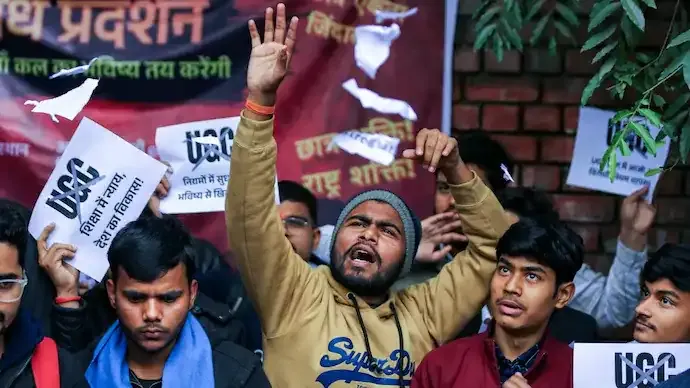
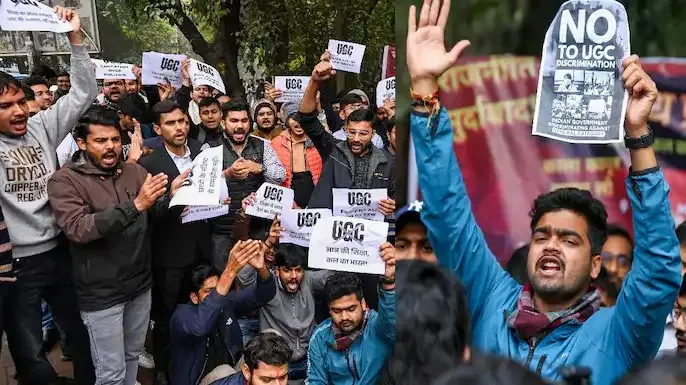
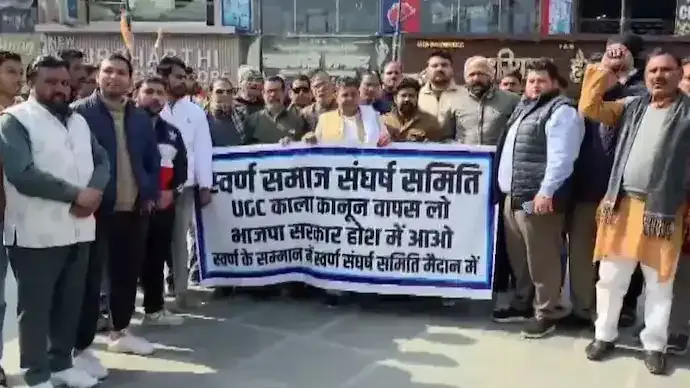
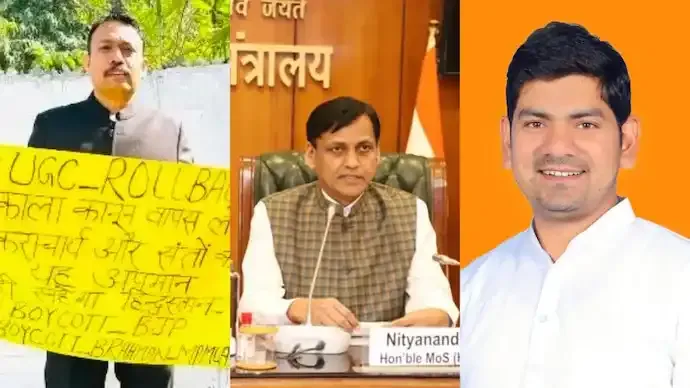
The pushback has been most visible in Uttar Pradesh, where more than a dozen BJP office-bearers resigned in protest, alleging that the rules are one-sided and discriminatory against upper-caste communities. Protests have also been reported in cities such as New Delhi, Jaipur, Patna, Indore, Ranchi, and Chandigarh, with demonstrators arguing that the regulations single out general category students and faculty without adequate safeguards.

The controversy has its roots in a 2019 petition before the Supreme Court of India, filed by the families of Rohith Vemula and Payal Tadvi, who died by suicide after alleging caste-based discrimination. In January 2025, the court directed the University Grants Commission to make its 2012 anti-discrimination framework enforceable, observing that such regulations must be “more than symbolic.”
While the court’s original intent focused on enforcing protections for SCs and STs, critics argue that the UGC exceeded this mandate by extending the definition of caste-based discrimination to include OBCs. Notably, this expansion was not part of the draft regulations released for public feedback in February 2025 and appeared only in the final version notified on January 13, 2026.
Under the new framework, higher education institutions are required to establish a three-tier grievance redressal structure comprising an Equal Opportunity Centre, an Equity Committee, and mobile Equity Squads. Each institution must form a 10-member Equity Committee, with at least half the members drawn from reserved categories, including SCs, STs, OBCs, women, and persons with disabilities. Upper-caste groups argue that the absence of mandatory general category representation makes the structure inherently biased.
Concerns have also been raised over the removal of penalties for false or malicious complaints. While institutions face punitive action for non-compliance, the final regulations dropped draft provisions that proposed fines or disciplinary measures against complainants found to have made false allegations. Critics warn this imbalance could encourage misuse and damage reputations without due process.
The political fallout has placed the BJP on the defensive. Union Education Minister Dharmendra Pradhan has sought to reassure stakeholders that misuse of the rules will not be tolerated, though detailed clarifications remain limited. Opposition parties have responded cautiously, aware of the sensitive caste dynamics involved.
As petitions challenging the rules are currently before the Supreme Court, the UGC regulations now sit at the intersection of judicial scrutiny, administrative authority, and electoral politics. With Uttar Pradesh heading toward Assembly elections next year, the growing resentment among upper-caste groups threatens to complicate the BJP’s caste arithmetic, highlighting how policy decisions in higher education can rapidly evolve into major political fault lines.





Conversation
Be kind and stay on topic. Comments are moderated; abuse, spam and personal attacks are removed. Report a problem