

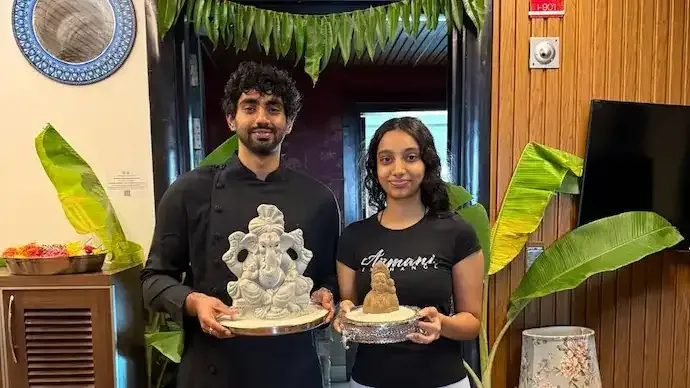

Two Bengaluru siblings — 17-year-old Veruschka Pandey and 20-year-old Vedansh Pandey — have designed a simple, affordable, and scalable solution to one of India’s most persistent civic challenges: clogged stormwater drains that trigger urban flooding. What began as a school research idea has evolved into a patented filtration system now attracting interest from policymakers.
Their journey shows how classroom curiosity, strong mentorship, and hands-on STEM learning can translate into real-world impact. The innovators told India Today that monsoon flooding and waste-clogged drains across Indian cities sparked their interest in creating a solution that was practical, durable, and accessible to municipalities.
A Low-Cost Engineering Solution
The siblings developed a drainage filtration design using galvanized iron and mild steel to keep costs low while ensuring strength and longevity. They emphasised that affordability was central, as any large-scale civic innovation must fit within tight municipal budgets. Their system is built to be installed quickly, maintained easily, and adapted to cities with varying infrastructure needs.

From Idea to Patent to Policy Discussion
The young innovators credited three factors for their progress: research-driven design, strong mentorship, and persistence. Their previous work in public health — including Project Suryanayak and research on Type 1 Diabetes — taught them how to engage effectively with policymakers and present evidence that drives systemic change.
Role of Schools in Supporting Innovation
They believe institutions can accelerate youth-led innovation by offering lab access, fostering interdisciplinary thinking, encouraging project-based learning, and connecting students with experts. With proper support, they said, student innovations can scale beyond the classroom.
The Need for Public-Private Partnerships
According to the innovators, municipal corporations, public works departments, and state development bodies must collaborate on pilot projects to test such solutions in real environments. Partnerships with engineering institutes, sustainability organisations, and civic planners will help refine and deploy the design at scale.
A Message for Future Student Innovators
Their advice to young minds: start by observing the problems around you, focus on impact rather than perfection, and keep iterating. Innovation, they said, is powered by curiosity, empathy, and the courage to solve real-world challenges — not by age.








Conversation
Be kind and stay on topic. Comments are moderated; abuse, spam and personal attacks are removed. Report a problem