
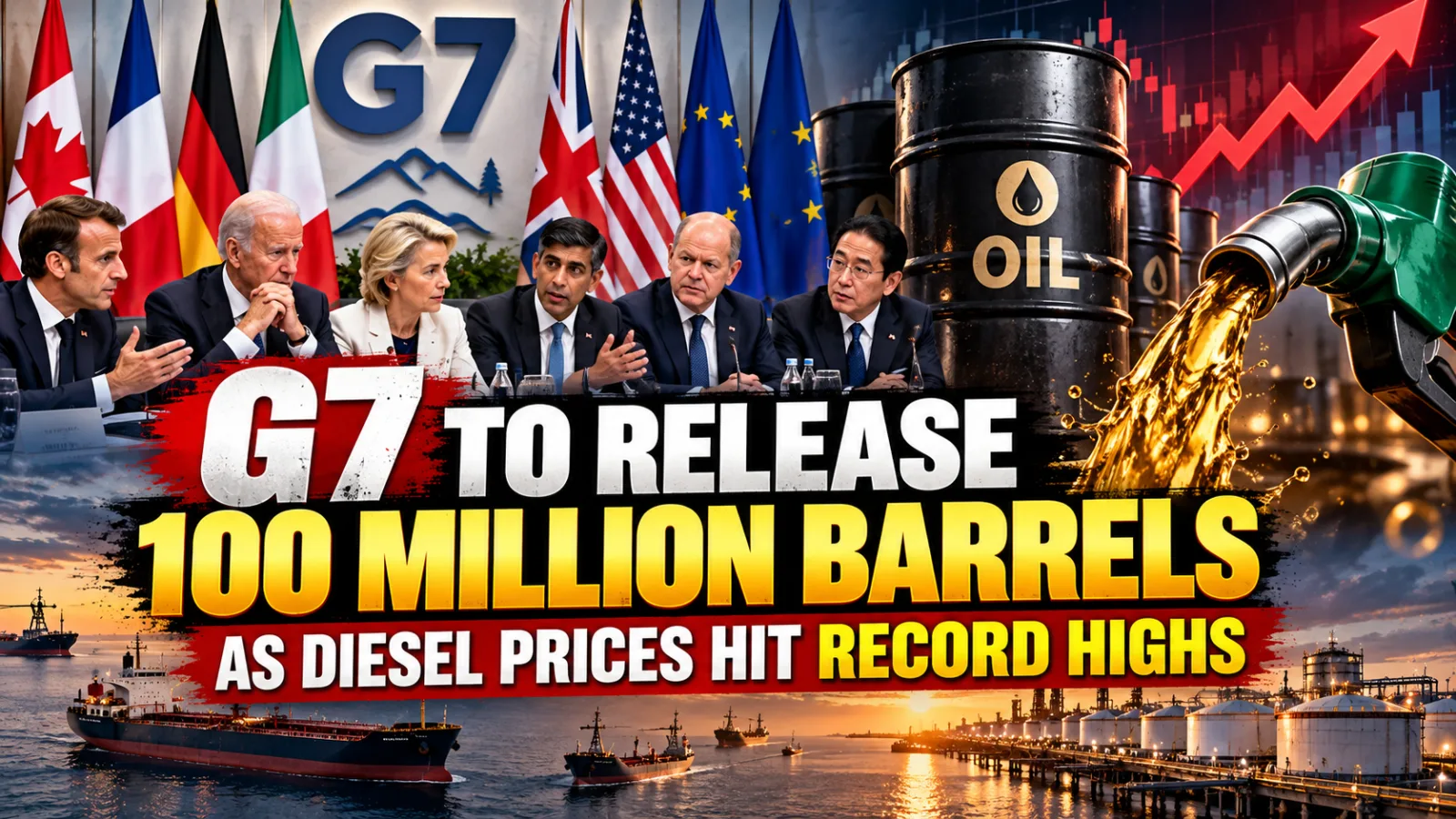
The G7 diesel release will bring 100 million barrels of oil and petroleum products into the market over four months as fuel prices climb sharply in the US and Europe. The agreement includes a “frontloaded substantial” release of diesel within the first 20 days, coordinated through the International Energy Agency.
The Group of Seven — Canada, France, Germany, Italy, Japan, the UK and the US, along with the European Union — announced the coordinated move after a videoconference chaired by French President Emmanuel Macron.
US diesel prices have reached record levels, with the national average reported at $6.37 per gallon on October 2 after reaching $6.52 on September 22. European diesel prices have also surged.
Supply Disruptions Add to Fuel Pressure
The release comes as global fuel markets face multiple supply disruptions. Reduced refined-product shipments from Persian Gulf producers, damage to refineries and blocked export routes have affected availability.
Russia has also restricted diesel exports following attacks on its refineries, increasing competition among countries seeking alternative supplies. China has separately suspended most fuel exports beyond Hong Kong and Macau for October, adding further pressure to Asian markets.
The G7 agreement also includes a commitment by members not to impose energy export restrictions on one another. US President Donald Trump said the United States would not proceed with a proposed diesel export ban.
Emergency Reserves Raise Long-Term Questions
The announcement has also raised questions about how much of the 100 million barrels represents new supply and how much comes from commitments made earlier this year. Reuters reported that the G7 statement did not provide a detailed country-by-country breakdown.
Energy analysts have also warned that drawing down strategic reserves can provide short-term relief while reducing the emergency cushion available if another supply disruption occurs.
The G7 expects the coordinated release to improve market liquidity and ease pressure on fuel prices, but its longer-term effect will depend on how quickly global production, refining capacity and trade flows recover.
For more global business and energy updates, visit All India Story.





Conversation
Be kind and stay on topic. Comments are moderated; abuse, spam and personal attacks are removed. Report a problem