
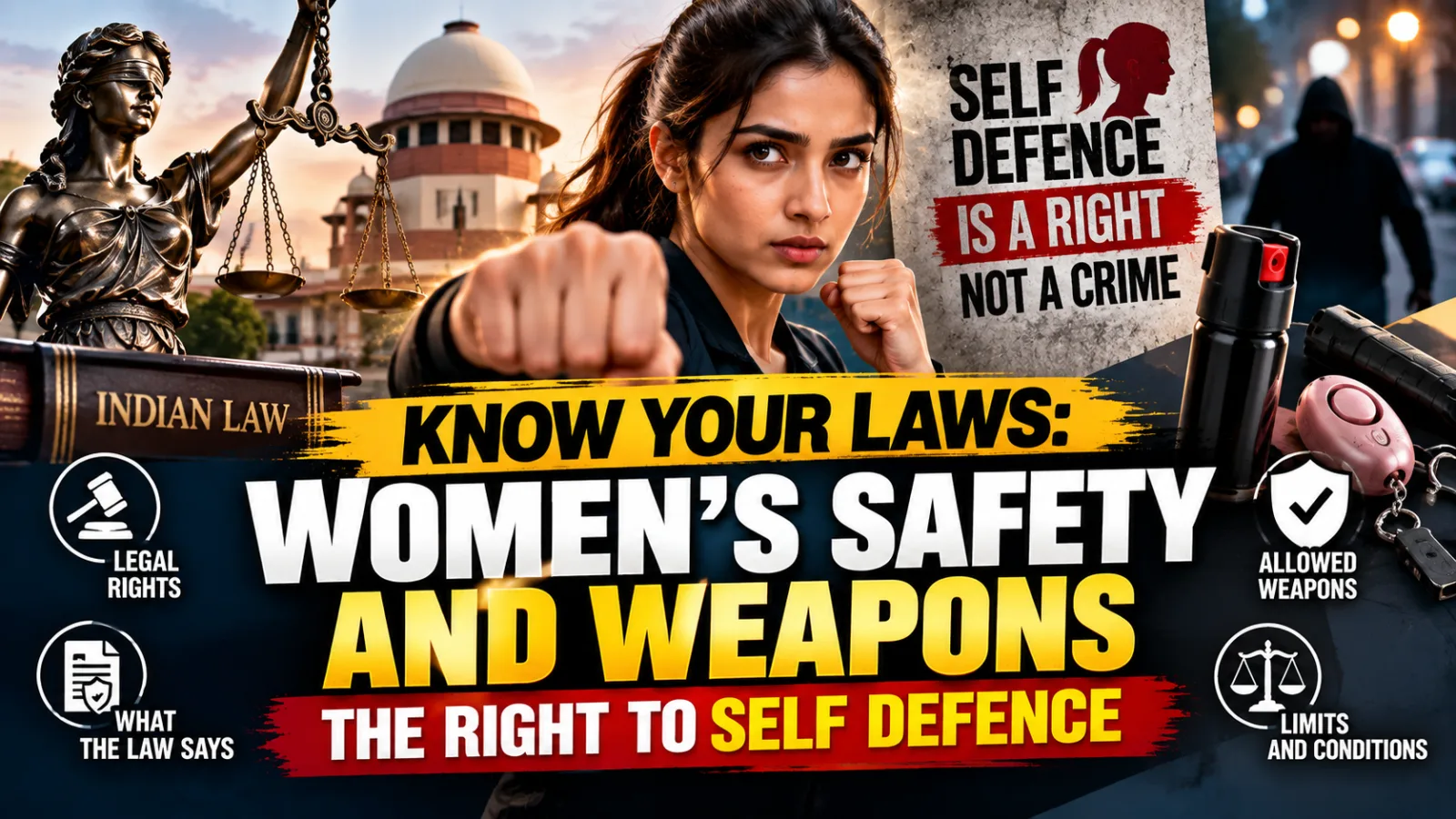
A viral video by a retired Indian Army officer has reignited discussion around women’s safety and the use of defensive tools such as air guns. The debate comes amid wider concerns over sexual violence and the effectiveness of institutional safeguards.
Indian law recognises the right of private defence. Under Sections 34 to 44 of the Bharatiya Nyaya Sanhita (BNS), a person may defend themselves or another person against certain threats to the body or property. However, the law also places limits on how that right can be exercised.
When can private defence apply?
Section 37 states that private defence does not extend to causing more harm than is necessary for defence. Section 40 provides that the right begins when there is a reasonable apprehension of danger and continues only while that danger exists.
Section 38 provides broader protection in situations involving serious offences such as rape, murder, kidnapping, acid attacks and certain forms of grievous harm. In such circumstances, the law can permit force that causes serious injury or death, subject to the facts of the individual case.
This means that the legality of using an air gun, pepper spray or another defensive device depends heavily on the circumstances. A response to verbal harassment alone would be treated differently from a response to an immediate physical or sexual assault.
What about air guns and other defensive tools?
The classification of the device and the circumstances in which it is used can both matter. Under the Arms Rules, certain low-power air weapons meeting specified muzzle-energy and bore limits do not require an arms licence, although purchase requirements and dealer restrictions still apply.
There can also be restrictions on carrying such devices in places such as airports, metro systems and other security-sensitive locations.
Legal experts quoted in the discussion emphasise that the central issue is generally whether there was a reasonable threat and whether the response was necessary and proportionate.
Advocate Jayshree Satpute said the legality of defensive action depends less on the particular weapon and more on the circumstances and level of threat. Senior advocate Mahalaxmi Pavani similarly noted that private defence must be assessed from the perspective of the person facing the danger, while senior advocate Avi Singh stressed that a person relying on private defence may need to establish that the legal conditions were met.
Ultimately, carrying a defensive tool does not automatically make its use lawful in every situation. The facts surrounding the threat, the immediacy of the danger, the nature of the response and applicable weapons regulations can all become relevant.


Conversation
Be kind and stay on topic. Comments are moderated; abuse, spam and personal attacks are removed. Report a problem